
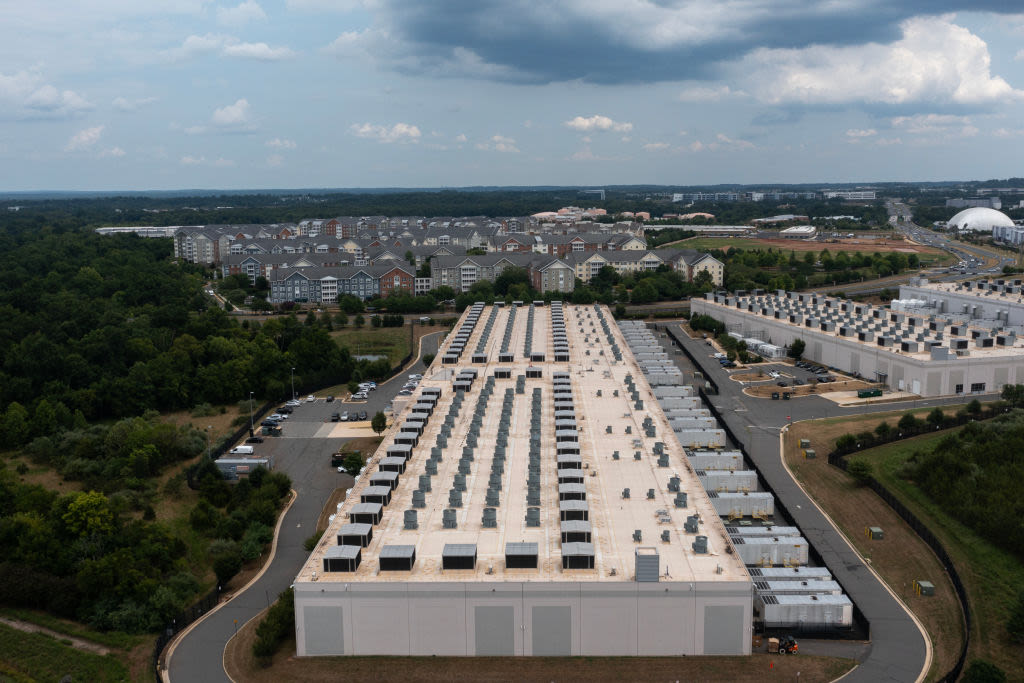
Voters across 18 municipalities and townships in Ohio are preparing to cast their ballots this Election Day on measures that could fundamentally reshape the future of tech infrastructure in their backyards. The upcoming votes represent a widespread grassroots response to the swift expansion of massive server farms and computational facilities throughout the state, giving local residents a direct say on whether to curb or prohibit these developments.
The surge of ballot questions follows the critical September 4 deadline, which was the final date for citizens to submit charter amendment petitions to their respective municipal councils for inclusion on the November 3 ballot. Under municipal charter regulations in Ohio, registered voters maintain the right to file charter amendment initiatives at any time of the year; however, when such submissions fall outside the standard electoral window—specifically when the general election is fewer than 60 days or more than 120 days away—the matters must instead be resolved through dedicated special elections.
This local pushback comes as Ohio cements its status as a major national epicenter for digital infrastructure. According to findings published in an April study by the Pew Research Center, Ohio currently ranks fourth in the United States for operational data centers. Technology conglomerates and commercial developers continue to eye the state for dozens of additional facilities, a trend that has triggered mounting neighborhood opposition over surging utility rates, environmental consequences, and the rapid rise of artificial intelligence infrastructure.
Among the 18 jurisdictions facing ballot questions, nine communities have submitted measures that establish a unified threshold against large-scale power consumers. Voters in Conneaut, Defiance, Granville, Oregon, Pataskala, Piqua, Sunbury, Trenton, and Upper Sandusky will specifically decide whether to prohibit data center facilities that consume more than 25 megawatts of electricity on a monthly basis.
These nine local initiatives are modeled after a broader campaign orchestrated by the advocacy coalition Conserve Ohio. While the organization had originally intended to put a constitutional amendment on the statewide ballot to restrict high-capacity data centers, it was forced to defer that goal toward the 2027 general election after failing to meet the state's signature filing deadline in July.
Despite the delay at the state level, Conserve Ohio has shifted its immediate focus toward empowering grassroots municipal campaigns. The organization stated that it is actively collaborating with numerous neighborhoods statewide to enact municipal-level bans and establish local governmental frameworks that reflect direct citizen oversight and community-focused decision-making.
The intensity of the debate is particularly evident in Piqua, where community activist Alisha Lange has helped lead the resistance against planned technological developments. Lange first stepped into civic activism in 2023 after a municipal-approved battery facility caused ongoing medical and health problems for her and neighboring residents, an ordeal that led to unresolved grievances despite direct appeals to political leaders such as U.S. Representative Mike Carey.
Lange turned her focus to local direct action after tech giant Meta unveiled proposals to construct a massive data center complex in Piqua designed to draw an estimated 1,400 megawatts of power. Finding private meetings with elected representatives unproductive, Lange successfully collected the necessary signatures to trigger a recall vote targeting the mayor of Piqua along with two city commissioners who supported the initiative.
The civic push in Piqua has since expanded to include multiple targeted ballot efforts. Organizers submitted two additional petitions intended to harmonize the city's petition signature requirements with overarching state standards while simultaneously seeking to invalidate an existing municipal contract arranged to supply electric power to the proposed Meta site.
Lange noted that collecting petition signatures has fostered unexpected solidarity among residents who feel alienated by rapid commercial rezonings. While noting that the data center proposals have created widespread frustration among taxpayers, she highlighted that the process of organizing petition drives has united neighbors who are eager to voice their shared concerns regarding local resource management.
Local ballot initiatives across the state reflect varied regulatory strategies tailored to specific municipal circumstances. In Piqua, strong public sentiment during the initial signature drive prompted organizers to gather enough support to qualify a separate petition for a special election that would institute a total prohibition on data center development.
Other municipalities have adopted distinct statutory limits on industrial energy consumption. In Urbana, voters will weigh in on a proposed charter amendment that sets an even stricter ceiling, seeking to bar data facilities that consume more than 7.5 megawatts of electricity. Meanwhile, Hubbard stands as the sole municipality in Ohio presenting its electorate with a total, comprehensive ban on data centers on this November's ballot.
In central Ohio, the pushback has expanded beyond data facilities alone to encompass broader commercial zoning controls. In Pleasant Township, resident Jen Belt, who lives within two miles of a proposed data center development known as Project Maple in neighboring Grove City, joined an initiative requiring voter consent for any incoming heavy industrial construction in the municipality.
The high volume of municipal ballot initiatives directly reflects the scale of ongoing corporate development across the state. Out of the 18 jurisdictions preparing for ballot questions this November, 14 have already received formal applications or detailed development proposals for new data center projects.
As the November election approaches, the outcomes of these 18 municipal votes will serve as a significant barometer of public sentiment in the Midwest. The results are expected to test the legal reach of municipal charter powers while establishing important precedents for how local communities manage the land, water, and electrical demands of modern computational facilities.





(0)