
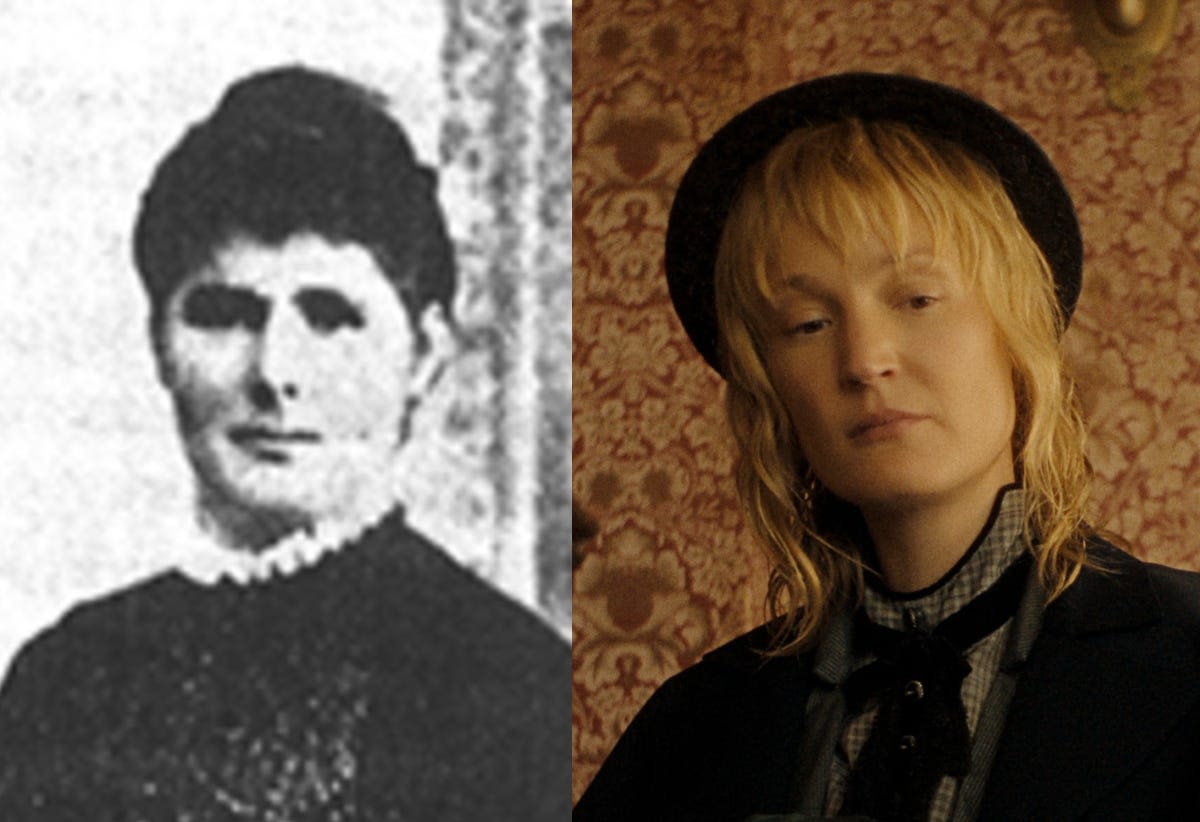
The upcoming release of the Netflix anthology series "Monster: The Lizzie Borden Story," spearheaded by television producer Ryan Murphy, has reignited widespread public fascination with one of the most infamous true-crime cases in American history. As viewers prepare to delve into the grisly 1892 hatchet slayings of Andrew and Abby Borden in Fall River, Massachusetts, significant cultural curiosity has once again centered on Bridget Sullivan, the domestic maid who was present in the home on Second Street during the horrific double murder.
In the fourth season of the anthology drama, acclaimed European actor Vicky Krieps steps into the shoes of the Borden family's Irish domestic worker. Despite Krieps possessing a distinct German accent that contrasts with Sullivan's historical heritage, the promotional trailer highlights her character's pivotal presence as an immediate witness and potential conspirator. Alongside co-star Ella Beatty, who portrays Lizzie Borden, the production brings the maid's contested role in the 19th-century tragedy back into popular focus.
As debates persist regarding how faithfully the television drama will capture the historical reality of 1890s Fall River, archival records provide a grounded portrait of Sullivan's life and her genuine involvement with the Borden household. Her experiences illustrate a complicated domestic environment marked by simmering family hostility, rigid Victorian class structures, and intense scrutiny following the fatal attacks on Andrew and Abby Borden.
Bridget Sullivan was an Irish immigrant who first entered the employment of the Borden household in 1889. Hired primarily to carry out fairly light domestic chores, Sullivan quickly found herself operating within an increasingly uncomfortable and divided domestic space. Living inside the residence, she became acutely aware of the deep-seated emotional friction between Andrew Borden's adult daughters, Emma and Lizzie, and their stepmother, Abby.
The pervasive hostility within the residence took an emotional toll on the young servant. Historical researchers Michael Martins and Dennis Binette documented in their authoritative volume "Parallel Lives" that Sullivan repeatedly sought to resign from her position. However, Abby Borden actively persuaded her to remain in their employ, on at least one occasion offering an increase in her wages to prevent her departure.
Sullivan's personal observations regarding the fractured family dynamic were publicly noted during the aftermath of the tragedy. According to an 1892 report published by the Boston Post, the domestic worker candidly remarked that Abby Borden was "too good for them" and bluntly noted that the stepdaughters harbored an intense dislike toward the matriarch.
Despite her years of dedicated service, Sullivan was subjected to a common social indignity by her employers. Both Emma and Lizzie Borden, who rarely engaged in household labor themselves, routinely addressed Bridget as "Maggie" rather than using her actual name. While modern observers have often viewed this habit as evidence of personal disdain, historians note that affluent households of that era frequently called domestic servants by generic titles or alternate names.
The days leading up to the murders on August 4, 1892, were characterized by widespread physical discomfort within the residence. Several occupants had fallen violently ill, a circumstance modern assessments attribute to food-borne bacteria exacerbated by sweltering summer heat and inadequate refrigeration. Although long-standing folklore claimed the family suffered after consuming spoiled mutton for breakfast, official trial testimony revealed the household had already experienced severe symptoms well before the mutton was ever prepared.
The morning of the slayings proved equally distressing for Sullivan. Having served morning breakfast to the household, the maid was suddenly overcome by intense nausea shortly before 9 a.m. and stepped out into the yard to vomit. After taking a brief period to recover, she dutifully returned to her morning chores and began washing the property's exterior windows, entirely unaware that Abby and Andrew Borden were being brutally attacked nearby.
Beyond the logistical events of the crime, dramatic retellings have frequently embraced salacious speculation concerning Sullivan's relationship with Lizzie Borden. Creative adaptations have often advanced the premise that Lizzie and Bridget shared a clandestine lesbian affair, framing their supposed secret romance as a joint motive that led them to collaborate in the planning and execution of the bloody murders.
This speculative narrative has been continually reinforced across various media adaptations throughout the decades. The concept was notably explored in Evan Hunter's 1984 novel "Lizzie," resurfaced prominently in the 2018 biographical feature film "Lizzie" starring Chloë Sevigny, and appears once again within the narrative framework of Ryan Murphy's newly produced series.
However, historical records provide no substantive evidence to corroborate the theory of an intimate romance between the two women. Archival documentation and witness testimonies fail to support claims that Sullivan was a lesbian or that her dynamic with Lizzie Borden ever exceeded the standard professional boundaries between a hired domestic servant and her employer.
Following the extensive court proceedings and Lizzie Borden's eventual acquittal, Sullivan chose to sever all ties with the community that had thrust her into national headlines. In the immediate wake of the trial, she returned briefly to her native Ireland to distance herself from the intense media spectacle that had consumed her daily life in New England.
Sullivan eventually journeyed back to the United States to rebuild her private life, but she intentionally chose never to reside in Fall River again. Her deliberate withdrawal from the Massachusetts city marked the end of her direct involvement in the notorious case, even as modern cinematic dramas continue to reinterpret her role in the historic mystery.








(0)