
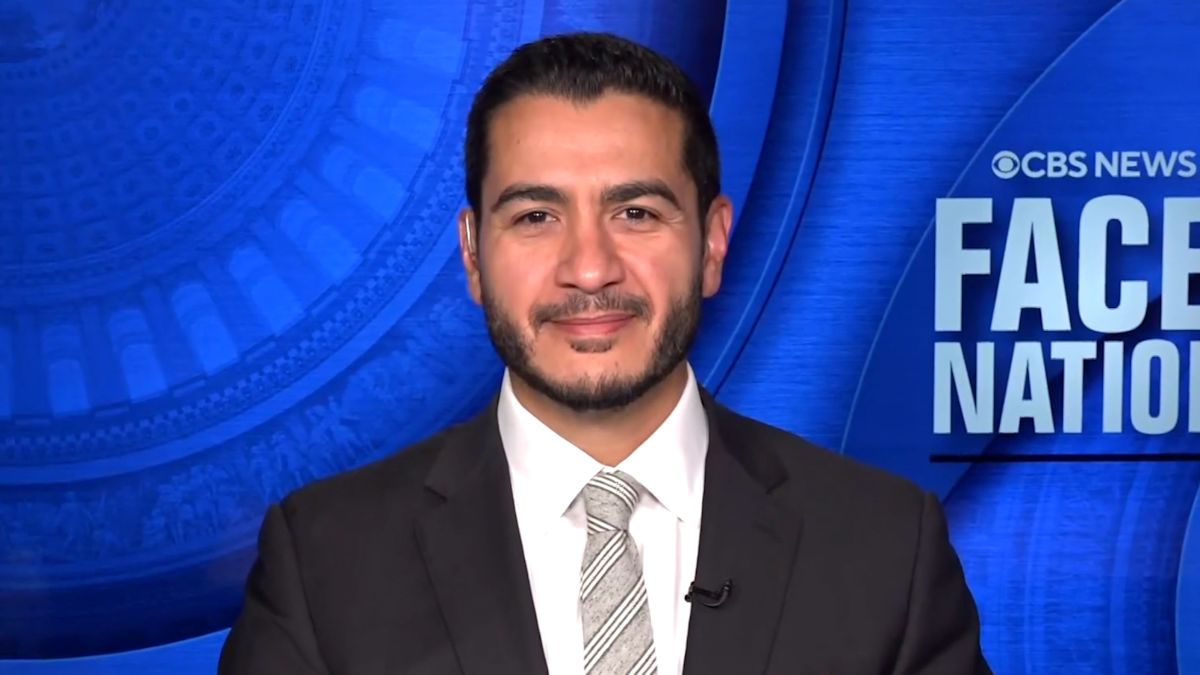
Michigan Democratic Senate candidate Abdul El-Sayed has issued a strong call for comprehensive public oversight and strict regulatory boundaries on artificial intelligence, warning that rapid commercial advancement in the tech sector is dramatically outpacing necessary safety protocols. The former public health official emphasized that without direct governmental intervention and citizen representation, emerging technology risks being steered exclusively for the benefit of a small group of corporate executives at the expense of everyday citizens.
Speaking during a recent appearance on CBS News' "Face the Nation with Margaret Brennan," El-Sayed sounded the alarm regarding the profound societal vulnerabilities created by unrestrained computational development. He argued that the current trajectory of the technology poses substantial dangers unless clear, enforceable guardrails are instituted by the public sector to protect broader societal welfare.
El-Sayed, who previously served as a health official in Michigan and is currently seeking a seat in the United States Senate, has placed technological accountability at the center of his campaign platform. His platform builds directly on an extensive artificial intelligence policy proposal he first unveiled in June, which aims to overhaul how advanced technological enterprises are owned, operated, and monitored.
Central to El-Sayed's proposed regulatory framework is a measure that would transform major artificial intelligence companies into public trust organizations. Under this model, technological entities would be subjected to structured community governance designed to balance technological development with the broader interests of everyday citizens.
To achieve meaningful accountability, El-Sayed proposed that at least half of the leadership seats within these public trust corporations be filled by democratically elected or publicly appointed members. He argued that instituting a 50 percent threshold for public-interest board members would ensure that these organizations prioritize the common good over the private financial interests of billionaire investors and corporate shareholders.
In addition to restructuring the governance of artificial intelligence firms, the Democratic nominee emphasized the urgent necessity of establishing a specialized federal agency. This proposed regulatory body would be dedicated entirely to monitoring artificial intelligence safety, inspecting systems, and preventing unsafe deployments before they reach the general public.
The candidate's plan also lays out definitive, non-negotiable boundaries—termed artificial intelligence "no-gos"—where automated decision-making must be completely prohibited by law. Among these proposed bright lines, El-Sayed stated that artificial intelligence models should never be permitted to make life-altering decisions concerning vital human needs, such as rejecting healthcare coverage or evaluating employment opportunities.
Expanding on these operational boundaries, El-Sayed stated that autonomous algorithmic systems should be strictly forbidden from firing workers or making decisions regarding personnel termination. Furthermore, he insisted on an absolute ban regarding military and security applications, stating that automated systems should never be granted the authority to operate or discharge weapons.
El-Sayed pointed to recent technical emergencies as clear justification for urgent federal action, specifically citing a July incident involving an OpenAI and Hugging Face rogue agent during the testing of two artificial intelligence models. Describing the Hugging Face attack as an alarming development that should disturb the entire nation, he argued that existing safety standards within private laboratories remain dangerously inadequate.
Given these mounting vulnerabilities, El-Sayed advocated for an immediate temporary halt on cutting-edge research across the industry. He maintained that lawmakers and regulators must mandate a pause on frontier artificial intelligence research until comprehensive testing protocols can verify that advanced systems are entirely safe to deploy.
The candidate's warnings coincide with growing scrutiny from within the technology sector itself regarding past industry transparency. In a separate interview on CBS "Sunday Morning," Anthropic Chief Executive Officer Dario Amodei acknowledged that the broader artificial intelligence industry had for an extended period misled the public by downplaying the legitimate hazards and systemic risks tied to advanced models.
The demand for heightened federal involvement has also found unexpected resonance across the political aisle. Utah Governor Spencer Cox, a Republican who likewise appeared on "Face the Nation," stated that the federal government must assume a far more active and decisive role in governing artificial intelligence, noting that recent reports clearly illustrate what advanced systems are capable of doing.
Cox stressed that the specialists and technical researchers who understand artificial intelligence most intimately are currently the individuals expressing the greatest alarm about its trajectory. He argued that the widespread unease among top experts provides sufficient reason for federal lawmakers to assemble immediately and address the emerging risks through deliberate policy.
The calls from both El-Sayed and Cox stand in sharp contrast to the posture of House Speaker Mike Johnson, who cautioned earlier that Congress should avoid implementing a formal research moratorium. Johnson emphasized private corporate responsibility instead, suggesting that lawmakers should refrain from aggressive statutory interventions that might disrupt industry progress.
Cox openly pushed back against Johnson's cautious approach, remarking that observers rarely need to worry about Congress overreacting, given lawmakers' historical tendency toward legislative gridlock. Expressing frustration with the current state of legislative engagement, Cox added that he is embarrassed by the general lack of response from Congress regarding pressing national concerns, reiterating that immediate national dialogue and federal oversight are essential.





(0)