
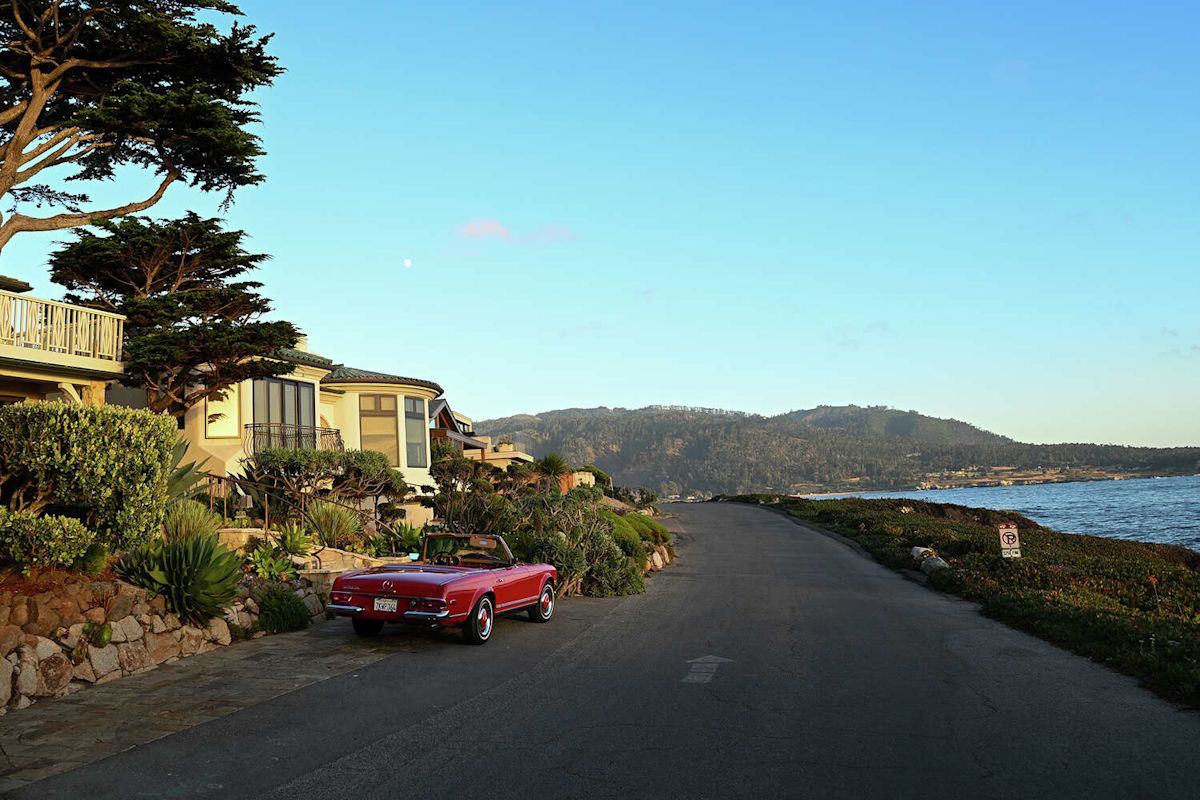
For 110 years, the scenic coastal enclave of Carmel-by-the-Sea, California, maintained a steadfast refusal to conform to conventional street numbering. That longstanding tradition has officially come to an end as the community begins affixing numerical addresses to its homes, commercial properties, and civic buildings, marking a historic transformation for the picturesque seaside municipality.
The tangible effects of the policy change are now visible throughout the city's tree-lined avenues, where address plaques have started appearing on storefronts and private residences. Marking a major symbolic milestone in the rollout, Carmel City Hall recently received its own official numerical designation, establishing its address at 662 Monte Verde St.
The town’s aversion to standard street numbers dates back to its incorporation in 1916. At the time, Carmel was established primarily as a secluded haven for creative writers and artists who viewed numerical identifiers as an unnecessary municipal convention. The founding community members consciously preferred a more personal, informal approach to navigating their coastal village.
Over subsequent decades, this philosophical resistance to modern civic norms became a cornerstone of Carmel’s civic identity. Local governance often preserved the town's unique character by intentionally declining to pursue conventional changes. Community leaders instituted strict development policies, safeguarding historic architecture from demolition, capping structural heights to protect the native tree canopy, and maintaining quirky municipal statutes, including a long-standing ban on wearing high heels without a permit.
In the absence of standard numbers, property owners embraced whimsical naming conventions during the middle of the 20th century. Residences across the village were christened with literary puns and idiosyncratic titles such as "Sandy Pause" and "A Turn of Fraise," reinforcing the fairy-tale aesthetic and artistic legacy that drew visitors and new residents to the coastal town.
The non-numerical addressing scheme was eventually codified directly into the city's municipal statutes. Under local law, properties and businesses were formally cataloged based on descriptive spatial assessments relative to the nearest cross-street intersections, a process overseen and cataloged by the municipal community planning and building department.
While the directional system functioned smoothly for generations in a slower-paced era, the arrival of modern commerce and digital logistics in the 21st century introduced significant friction. Courier drivers and package delivery services frequently struggled to pinpoint destinations, often finding themselves circling narrow, winding lanes in search of uniquely named cottages that lacked uniform markers.
The most critical factor driving the reevaluation of the policy, however, centered on emergency medical and public safety operations. Despite first responders possessing extensive local knowledge and intimate familiarity with Carmel's street grid, locating emergency callers quickly during urgent situations became increasingly difficult and hazardous.
The issue began gaining major political momentum two years ago during a neighborhood campaign event held in a backyard, where residents repeatedly pressed mayoral candidate Dale Byrne on the town's lack of addresses. The persistent inquiries made it clear to Byrne that the addressing dilemma would emerge as a pivotal focus of his prospective administration.
After securing the mayor's office, Byrne oversaw a public review process that included town meetings to collect feedback from local residents. The mayor also conducted independent inquiries with municipal first responders, consulting directly with leaders in the police and fire departments to evaluate operational data and emergency dispatch response times.
The findings from those consultations revealed alarming public safety risks associated with the traditional navigational system. Emergency personnel recounted situations where rescue workers faced critical, life-threatening delays while attempting to locate individuals in medical distress along complex, unnumbered street segments.
In one notable episode tracked by Byrne, emergency crews were dispatched to assist a resident suffering a heart attack on a particularly challenging street. Because the exact house could not be immediately identified from the dispatch description, firefighters on the dispatched engine were forced to go door to door down the roadway to find the patient.
During that same response, a police officer patrolling in a squad car managed to locate the distressed resident first. Fire department personnel were then able to converge on the scene roughly ten minutes later to deliver the necessary lifesaving medical treatment, highlighting the dangerous vulnerabilities created by the absence of house numbers.
Faced with growing public support for modernization and urgent warnings from safety officials, the Carmel City Council voted last October to repeal the century-old ordinance. The historic decision made Carmel-by-the-Sea the final incorporated municipality in the United States to adopt a standardized street address system, permanently changing how the coastal community is navigated.


(0)