
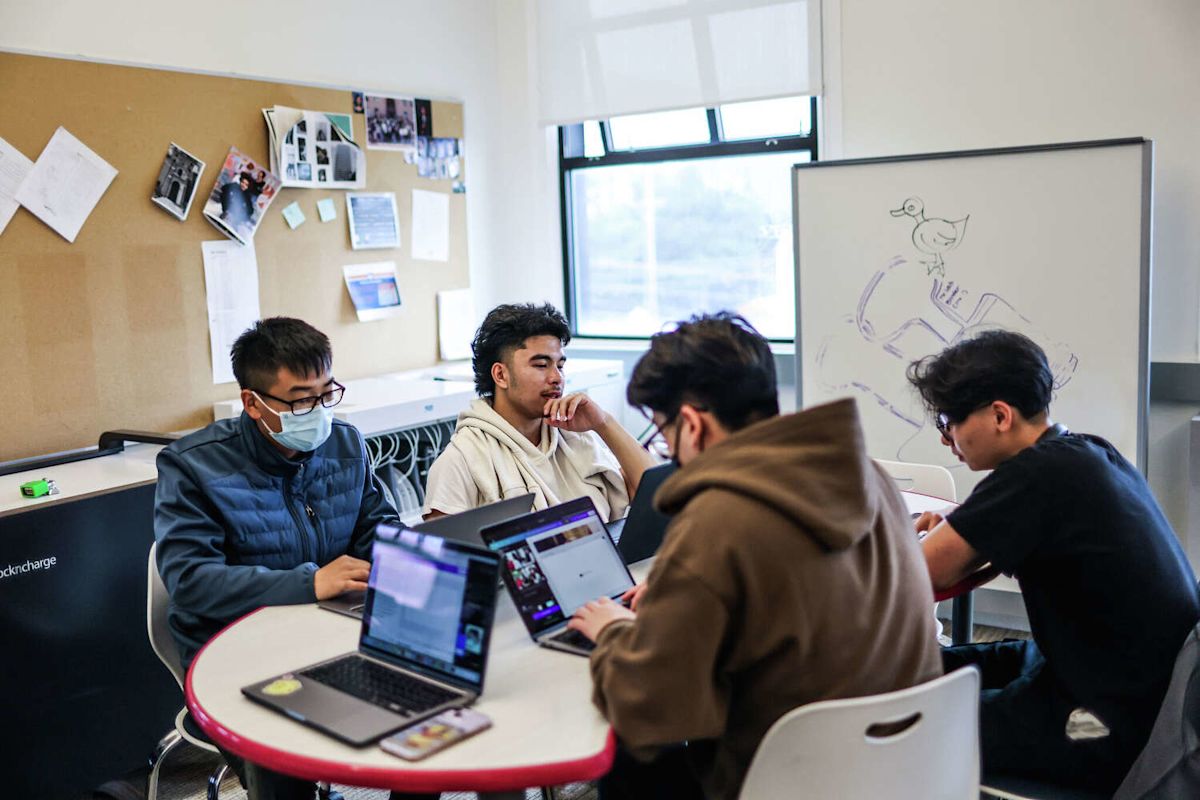
A growing coalition of parents and educators across San Francisco is mounting a concerted pushback against the encroachment of artificial intelligence and digital screens in public school classrooms, casting a critical spotlight on automated tools used to instruct young children.
At the heart of the emerging conflict is an online campaign that has already garnered nearly 1,000 signatures from parents, teachers, and concerned community members. The petition formally urges San Francisco Unified School District officials to enforce sweeping limits on screen time and immediately curtail the use of classroom artificial intelligence software.
The primary target of the community's frustration is Amira Learning, a widely deployed interactive literacy platform that listens to students reading aloud to evaluate, track, and attempt to improve their foundational reading capabilities.
Signatories of the petition are demanding that district leaders disable all generative artificial intelligence programs, conversational chatbots, and open search engines on student-issued hardware. Furthermore, the petition requests a complete cessation of AI-driven instruction for core academic subjects within elementary schools.
Organizers have emphasized that their movement is not an outright rejection of educational technology, but rather a call for disciplined oversight. According to the petition's text, families are asking district leaders to ensure that digital tools are deployed intentionally, transparently, and exclusively when there is clear evidence that they meaningfully enhance student learning.
The local resistance reflects a broader national and statewide pushback against digital over-saturation in learning environments. Across California, public school districts are actively implementing required restrictions on student mobile devices under state law, while communities nationwide are pushing for reduced screen exposure and full moratoriums on generative models such as ChatGPT and Claude across all grade levels.
These local education concerns also parallel broader global anxieties regarding the rapid acceleration of artificial intelligence. The debate in San Francisco arrives as leading executives from the nation's premier artificial intelligence developers publicly call for a measured slowdown in the pace of model development to mitigate catastrophic risks to humanity.
Leading the municipal campaign is Tech In Check San Francisco, a grassroots advocacy organization urging local administrators to emulate policies established by the Los Angeles Unified School District. Los Angeles education leaders recently introduced strict screen-time caps and enacted a comprehensive pause on generative AI tools within their classrooms.
Officials in the Los Angeles district justified their restrictive stance by pointing to serious pedagogical and psychological risks associated with data-driven generative tools, warning that chatbots can foster academic dishonesty, spread misinformation, encourage unhealthy emotional attachments, and undermine a child’s self-confidence.
In San Francisco, frustrated parents contend that school administrators have implemented modern software without maintaining open lines of communication. In addition to demanding clear opt-out mechanisms for classroom technology, families are calling for explicit district guidelines detailing when screens may be utilized, alongside stricter limits on social media access.
The lack of institutional transparency has alarmed parents of early elementary students, who have increasingly voiced their objections in community forums and directly to district representatives. Lisa Swan, a local parent, recounted her dismay upon discovering that her daughter had been working with Amira Learning during instruction time as a first grader and was continuing to use it in the second grade.
Swan noted that no informational notices or explanatory materials were ever sent home to inform parents about the software's adoption. Expressing frustration over the unannounced digital instruction, Swan argued that young children in early primary grades have no pedagogical necessity to be placed in front of computer screens.
San Francisco Unified currently utilizes two distinct offerings from Amira Learning. The first is an evaluation tool designed to screen students for dyslexia, adopted in compliance with a recently enacted California statute that lists the company among a small group of state-approved screening providers.
Controversy, however, predominantly centers on Amira's accompanying tutoring software. This program requires young students to speak into a computer microphone while reading aloud, utilizing an AI-powered animated cartoon character to intervene, correct pronunciation, and coach the child through reading exercises.
While independent researchers in Louisiana found that the tutoring software contributed to improvements in student reading performance, the study was financially backed by Amira Learning itself. This corporate sponsorship has fueled skepticism among parents who fear that commercial interests are outpacing prudent educational policy.
Beyond pedagogical efficacy, local families have raised alarms regarding student data privacy, biometric recording, and the loss of interpersonal instruction. District parent Lori Ronayne cautioned against normalizing algorithmic machines as substitutes for human connection in transitional kindergarten through 12th grade, noting that the long-term developmental, psychological, and neurological effects of sustained childhood AI interaction remain entirely unproven.
In response to the mounting criticism, Amira Learning founder and Chief Executive Officer Mark Angel defended the software, arguing that community skepticism stems from a fundamental misunderstanding of the technology. Angel asserted that his company's interactive literacy tool operates on conventional artificial intelligence rather than generative AI, describing the software as the polar opposite of a chatbot.
Angel further maintained that the reading screener and tutoring platform function much like an interactive video game that merely responds to user inputs rather than synthesizing new written or spoken material. Despite these corporate assurances, San Francisco parents remain steadfast in their demand for strict district safeguards, insisting that foundational early childhood learning must remain anchored in human interaction.


(0)