
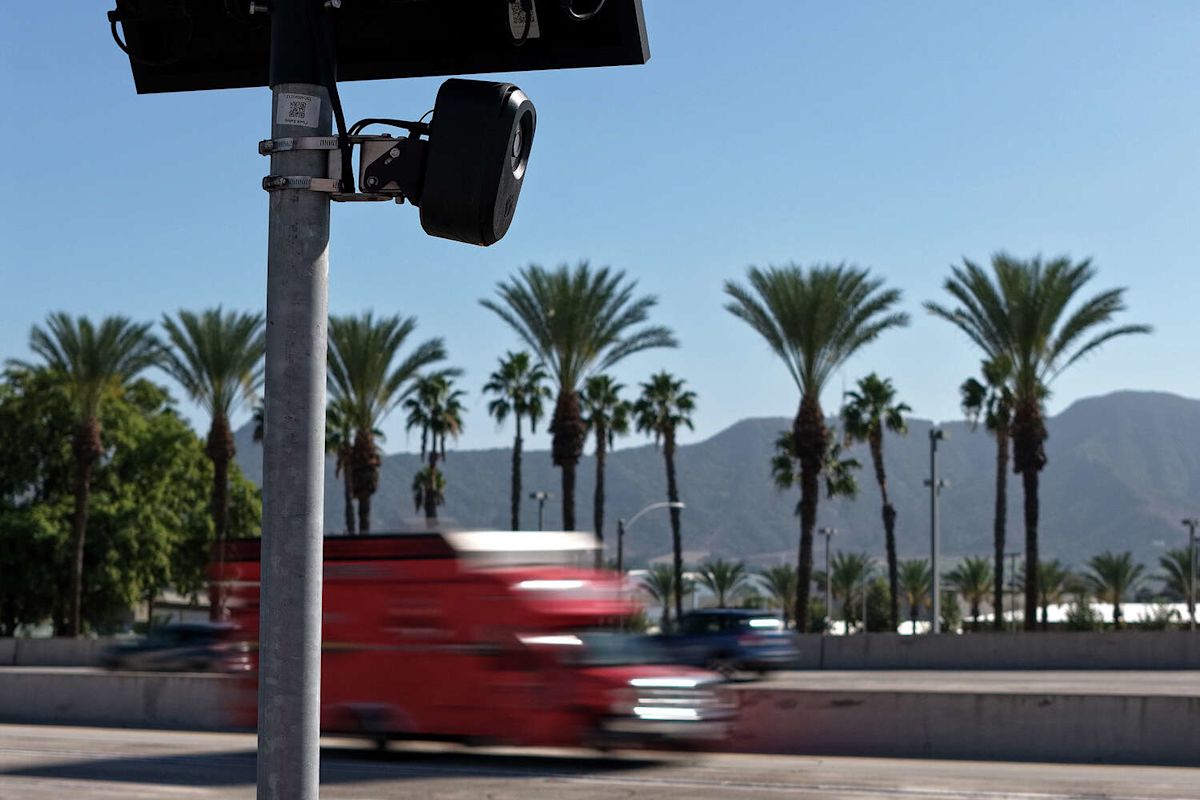
Municipalities across the San Francisco Bay Area are reevaluating their automated license plate reader infrastructure following sustained public pushback over mass surveillance, data privacy, and law enforcement practices. Two major regional cities, Antioch and Hayward, have moved away from industry market leader Flock Safety. However, rather than eliminating automated camera systems entirely, both local governments have chosen to transition their operations to Flock’s primary commercial competitor, Axon.
The municipal shifts come in the wake of an intense period of local friction across Northern California communities. In recent months, residents, grassroots organizers, and civil liberties advocates have voiced mounting concerns regarding digital surveillance, government overreach, and documented allegations involving police misuse of vast camera databases. Public demonstrations and heated city council meetings have pushed local officials to reconsider their ongoing vendor partnerships.
Across the region, city leaders have responded to public pressure with sharply diverging strategies. Some municipalities, including Santa Cruz and Mountain View, chose to address community objections by discontinuing their automated license plate reader programs altogether. These cities decided to dismantle their automated tracking capabilities rather than risk potential civil liberties infringements.
In contrast, other municipal administrations have adopted a different course, quietly replacing Flock with alternative private surveillance providers. In this shifting marketplace, multiple firms have stepped forward to compete for municipal contracts, including Motorola Solutions, Genetec, Rekor, and Axon.
Among these providers, Axon has increasingly established itself as the leading alternative for departments looking to replace Flock. Yet privacy advocates caution that switching between competing vendors does little to mitigate the fundamental civil liberties challenges associated with automated vehicle tracking networks.
Highlighting this concern, Lisa Femia, a staff attorney at the Electronic Frontier Foundation, pointed out that both corporate platforms share essentially identical operational models. According to Femia, both Flock and Axon design their systems to indiscriminately photograph every vehicle passing their camera lenses, recording travel data regardless of whether a driver is suspected of any criminal offense.
Femia emphasized that these automated systems capture comprehensive datasets on the public, documenting the precise time, geographical location, license plate number, color, make, and model of every car, as well as distinct characteristics like bumper stickers. Because both manufacturers log identical identifying markers for mass tracking, Femia described the municipal transition between the two companies as essentially swapping Coke for Pepsi.
Despite ongoing pushback from privacy advocates, law enforcement agencies remain steadfast in defending automated license plate readers, maintaining that the systems serve as vital investigative assets. Police officials emphasize that automated vehicle recognition enables detectives to solve complex crimes that might otherwise stall due to insufficient evidence.
This perspective was highlighted during an Antioch City Council meeting on August 25, where police Lt. Michael Mellone presented law enforcement's case for maintaining plate reader technology. Mellone stated that motor vehicles are directly tied to a substantial portion of the serious crimes investigated by the department, including armed robberies and shootings.
Mellone explained that eyewitness accounts during fast-moving investigations are often incomplete, leaving detectives with only a partial license plate sequence, a vague vehicle description, or a general direction of travel. In these instances, he noted, a plate reader system can quickly turn sparse initial details into a focused investigative lead. Over the prior year, Antioch’s Flock system aided officers in identifying at least 42 stolen vehicles, resulting directly in 23 arrests.
While acknowledging public concerns surrounding mass surveillance and constitutional rights during the meeting, Antioch council member Tamisha Torres-Walker remarked that she wanted to remove Flock from the city. Ultimately, Torres-Walker joined the rest of the council in voting to approve a four-year, $660,000 contract with Axon. Neither Torres-Walker nor Axon responded to SFGATE's requests for comment.
In a comparable administrative move, the city of Hayward finalized a five-year contract with Axon valued at $2.9 million. Communications officials representing Hayward also did not respond to requests for comment regarding their city's contract approval.
As communities continue to debate the necessity of public surveillance networks, academic research presents a mixed assessment of the technology’s broader efficacy. Ian Adams, a policing researcher at the University of South Carolina and co-author of a study on automated license plate readers, suggested that empirical findings challenge the absolute claims made on both sides of the issue.
Adams noted that while the cameras clearly aid in identifying and recovering stolen vehicles—the specific task for which they were engineered—the study found substantially less evidence indicating that the technology has a measurable impact on deterring or solving other forms of crime. Consequently, as Bay Area cities transition their contracts between corporate providers, the broader question of whether automated surveillance delivers meaningful public safety benefits relative to its privacy costs remains unresolved.









(0)