
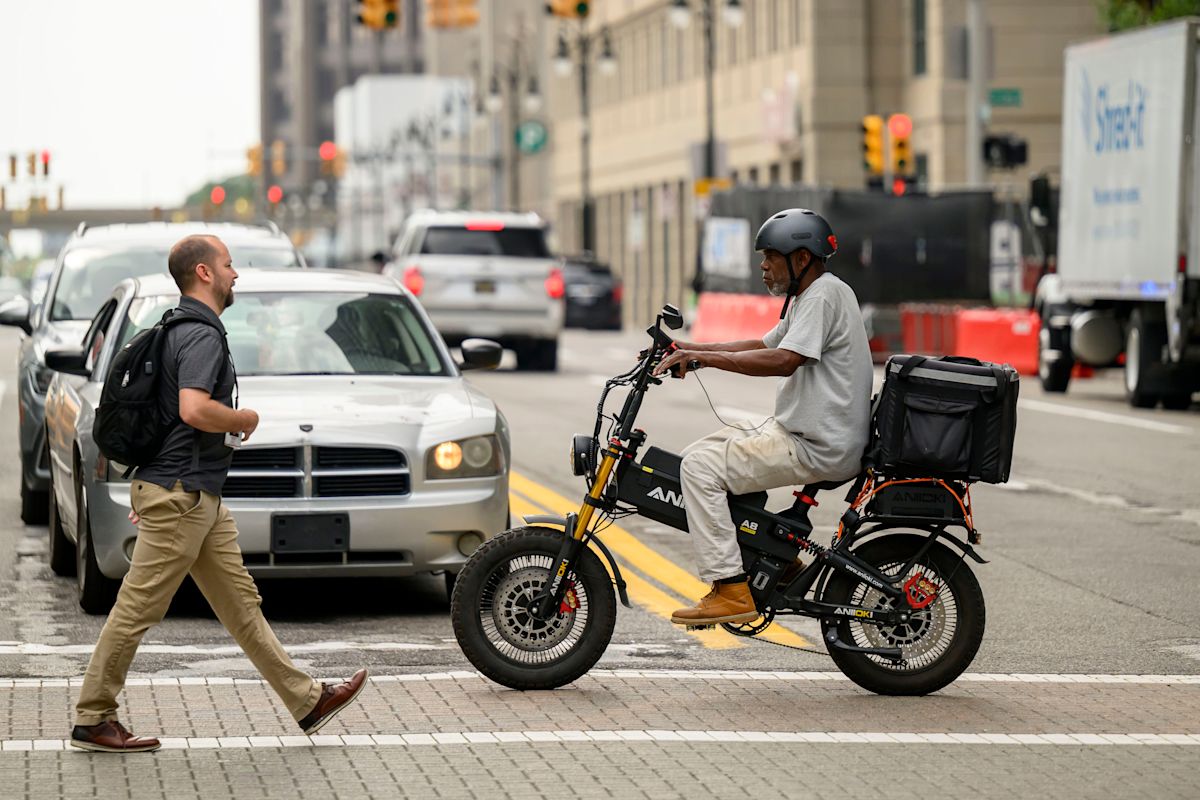
Elected officials in Warren are sounding the alarm over the rapid proliferation of high-speed electric bicycles, electric motos, and motorized minibikes navigating local pedestrian pathways. During a recent municipal meeting, members of the Warren City Council voiced mounting apprehension regarding public safety as these motorized platforms increasingly share space with pedestrians on sidewalks and public thoroughfares.
The expanding popularity of micro-mobility devices has outpaced existing municipal regulations across Michigan, leaving local governments grappling with how to curb dangerous riding behaviors. Council members emphasized that the accelerating speeds of modern electric cycles present distinct traffic hazards, particularly when operated by untrained juveniles without adequate oversight.
Council Secretary Mindy Moore initially scheduled a formal discussion for Tuesday evening to examine the operational risks posed by electric bikes, e-motos, and minibikes throughout the city. However, efforts to delve into enforcement logistics faced administrative hurdles when anticipated participation from local law enforcement did not materialize.
Moore stated that she had sought input and data from the Warren Police Department to help inform the council’s policy considerations. According to Moore, departmental personnel were reportedly instructed not to collaborate with the council during the scheduled session. The police department could not be reached immediately for comment following the meeting.
City administration officials offered a contrasting perspective regarding the lack of police involvement. Clarissa Cayton, a spokesperson representing Warren, stated that no official from the City Council had reached out to the Mayor's Office to formally request a presentation or report from law enforcement regarding electric bike usage and enforcement issues.
Faced with an absence of departmental guidance, the City Council voted unanimously to table the matter. Members agreed that while comprehensive rules are needed, moving forward without practical enforcement strategies would be counterproductive until proper coordination is established.
Moore underscored the fundamental dilemma confronting municipal leaders, noting the extreme difficulty in monitoring and penalizing fast-moving, non-traditional vehicles. She questioned how local authorities could realistically enforce traffic standards on sidewalks, floating ideas such as vehicle confiscation or the imposition of substantial financial penalties against parents whose children endanger pedestrian safety with overpowered machines.
Sharing her personal encounters with reckless riding, Moore recounted witnessing seven or eight youths operating minibikes outside a local nail salon. She described seeing the young riders performing stunts, including wheelies, while maneuvering aggressively along pedestrian sidewalks at alarming velocities.
To mitigate hazards before severe accidents happen within the city, Moore recommended that community outreach entities become involved. She suggested deploying the Warren Crime Commission to local educational institutions to conduct safety presentations, educating students and their families about the risks associated with operating high-powered cycles.
Councilman Jonathan Lafferty reinforced these concerns by recounting a recent incident on a local roadway. Lafferty explained that while operating his vehicle at the posted speed limit of 25 mph, a minibike riding on the adjacent sidewalk accelerated past his car. He estimated that the motorized device was easily traveling at speeds exceeding 30 mph.
Lafferty stressed that the prospect of life-altering physical trauma is a grave reality when lightweight motorized vehicles travel at roadway speeds within pedestrian zones. He remarked that local leaders cannot treat the escalating hazard lightly given the sheer velocity at which these devices operate.
Warren is not alone in confronting the surge in juvenile micro-mobility incidents. The council's deliberations follow decisive regulatory action taken by the Bloomfield Township Board of Trustees, which recently enacted a six-month emergency moratorium. That measure bars individuals under the age of 16 from operating electric bikes and motorized scooters on township sidewalks, granting police the authority to seize vehicles from violators.
The heightened scrutiny across Oakland and Macomb counties comes in the wake of catastrophic accidents involving young riders. On Labor Day, two 13-year-old boys sustained critical injuries in Bloomfield Township after the e-motos they were riding collided with a truck, illustrating the extreme physical vulnerability of youths operating motorized equipment in traffic environments.
The surge in collisions has also triggered a notable rise in legal activity across the region. Personal injury firms have increasingly begun targeting the emerging sector, with high-profile practices such as the Sam Bernstein Law Firm specifically promoting specialized legal services for victims injured in Michigan electric bicycle accidents.
The issue has also captured the attention of state lawmakers in Lansing seeking statewide standards. Michigan State Senator Jim Runestad introduced legislation designed to establish clear age thresholds for operating electric cycles. His proposed statute would bar children under the age of 14 from riding Class 1, Class 2, or Class 3 electric bicycles across all public roadways, sidewalks, and recreational trail systems.
Under Runestad's proposed legislative framework, riders aged 14 to 18 would be legally required to wear protective helmets and obtain explicit parental consent or direct supervision before operating e-bikes. The state senator maintained that because these motorized machines routinely reach speeds of 20 to 30 mph, young children often lack the necessary cognitive judgment, physical coordination, and road experience required to navigate safely around pedestrians and vehicular traffic. Runestad urged lawmakers to close existing legal loopholes to prevent further youth tragedies across Michigan communities.








(0)