
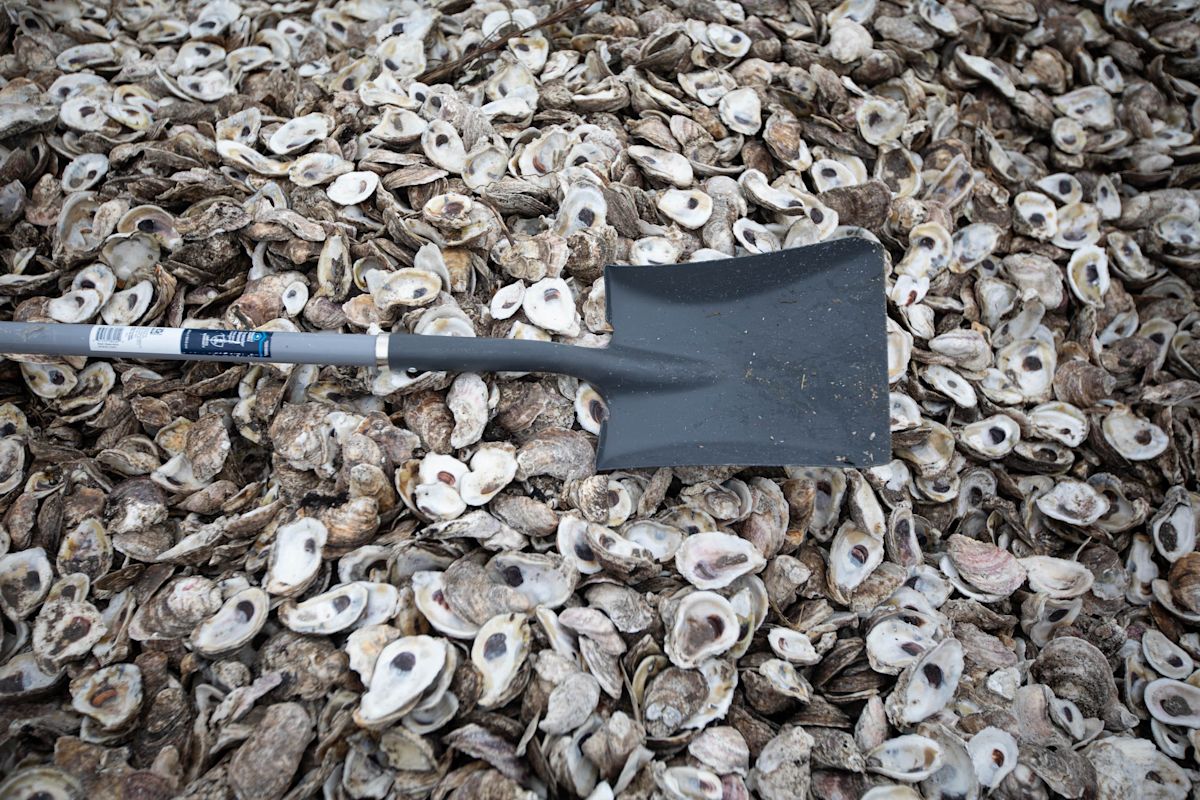
For countless seafood enthusiasts across Texas, dining on freshly harvested oysters on the half shell is a beloved culinary tradition. However, the standard journey of an oyster shell once the meal is finished often ends at a municipal landfill, removing vital natural building blocks from marine environments. To counter this ongoing ecological loss, an innovative South Texas conservation program has reached beyond the coast to intercept discarded shells directly from urban dining tables.
The Sink Your Shucks Oyster Shell Recycling Program, an initiative spearheaded by the Harte Research Institute at Texas A&M University-Corpus Christi, has officially broadened its operational reach into San Antonio. By establishing a collaborative partnership with the South Texas Coastal Initiative, the program is creating an organized logistics pipeline that enables inland restaurants to return their used shells directly to the Gulf Coast ecosystem.
When oysters are harvested from natural bays and commercial farms, the removal of their calcium carbonate shells deprives the surrounding waters of essential hard structure. Without interventions to return these materials, coastal environments face a deficit of suitable substrate, complicating the reproductive cycles of local marine life and diminishing the physical footprint of protective reef systems.
Over the course of its history, Sink Your Shucks focused the majority of its collection activities on the immediate Coastal Bend region. Working alongside community volunteers and seafood venues in Corpus Christi and nearby coastal communities, the organization has redirected millions of pounds of discarded shells into local estuaries rather than allowing them to accumulate in regional waste facilities.
These recovered materials have bolstered reef habitats throughout the Mission-Aransas Estuary, including targeted restoration zones in St. Charles Bay, Aransas Bay, and Copano Bay near Goose Island State Park. The program continued its expansion within coastal waters this past June by establishing an additional reef habitat situated just off Mustang Island in the Upper Laguna Madre.
The newly formed partnership with San Antonio marks an important evolutionary step for the initiative, proving that inland urban centers can actively participate in marine conservation efforts. Organizers emphasize that geographic distance from the coastline does not prevent metropolitan communities from playing a meaningful role in stabilizing Texas marine habitats.
Stephanie Tierce, the program coordinator for Sink Your Shucks, noted that the collaboration illustrates how inland diners can positively influence marine environments. She explained that an oyster consumed in a San Antonio dining room can ultimately become an integral component of the physical habitat that sustains future oyster generations, forming a continuous cycle from the bay to the dining table and back to the bay.
Shell retrieval efforts are already operating across several prominent culinary destinations in San Antonio. Participating locations include Southerleigh Fine Food & Brewery, Brasserie Mon Chou Chou, and Pullman Market in the historic Pearl District, along with Little Em's Oyster Bar located in the King William historic district.
The physical collection and transport logistics within the city are managed through a collaboration with Mission Compost. Through these initial efforts, the local partner has already successfully collected and diverted more than 5,000 pounds of discarded oyster shells from San Antonio kitchens for future reef deployment.
Culinary leaders involved in the effort view the recycling pipeline as a necessary component of sustainable kitchen management. Aaron Juvera, the chef de cuisine at Southerleigh Fine Food & Brewery, stated that working with the South Texas Coastal Initiative and Sink Your Shucks allows the restaurant to close the ecological loop on every oyster served. Juvera emphasized that returning shells to rebuild reefs aligns with their environmental commitments while supporting Texas oyster growers and educating staff and guests on the importance of coastal habitat regeneration.
The biological necessity for returning intact shells to coastal waters is tied directly to the unique life cycle of the species. When oyster larvae hatch, they are microscopic and lack hard protective shells, spending approximately three weeks swimming freely in the water column. To survive and mature, these young oysters must anchor themselves to a hard, stable surface—preferably the shells of existing or previous oysters—where they can permanently settle and begin constructing their own calcium shells.
Beyond fostering future oyster populations, the structural reefs created by recycled shells provide multifaceted environmental benefits for coastal Texas. These living reefs serve as essential shelter and nursery grounds for diverse fish and shellfish populations, act as natural biological filtration systems that clean and purify bay waters, and provide protective barriers that help reduce shoreline erosion caused by wave action.
The new San Antonio venues join a substantial directory of coastal establishments that already contribute to the Sink Your Shucks initiative. The long-standing coastal partner roster includes Black Diamond Oyster Bar, Castaway's Seafood, Copano's Restaurant, Dai Due, Doc's Seafood and Steaks, Dokyo Dauntaun, Dorado's Restaurant, Fulton Irish Pub, Hometown Seafood, KC's Oyster Shack, Latitude 28°02' Restaurant, Saltwater Grill, The Boiling Pot, Virginia's on the Bay, and Water Street Oyster Bar.
Community involvement remains a cornerstone of the restoration process, with past deployment events drawing hands-on help from local students across the Rockport-Fulton, Flour Bluff, and Corpus Christi independent school districts. The next public Sink Your Shucks reef restoration gathering is scheduled to take place at Goose Island State Park on October 3.
Organizers are actively seeking to recruit additional San Antonio restaurants to broaden the collection network and increase the volume of shells diverted from landfills. Representatives from interested dining establishments can obtain more information regarding participation requirements and collection logistics by contacting program coordinators via email at Eric@Ejdcomp.com.





(0)