
The Chicago Transit Authority is facing renewed questions over its public accountability after a protracted legal struggle forced the agency to disclose hundreds of passenger complaints regarding its private canine security contractor. The release of the records, obtained only after a local attorney took the transit system to court over state public records violations, sheds light on mounting community concerns over guard conduct, animal welfare, and platform safety.
As the operator of the nation's second largest public transportation network, the CTA has recently worked to restore rider confidence and rehabilitate its reputation amid ongoing safety challenges. However, the years-long withholding of records related to Action K9 Security has raised sharp questions about the transit agency's commitment to transparency when handling taxpayer-funded safety initiatives.
Canine security teams—distinguished by dark uniforms and muzzled German Shepherds—have maintained a regular presence across Chicago rail platforms for more than a decade. The CTA’s security partnership with Action K9 carries a taxpayer cost of $89.6 million, with handlers primarily assigned to deter platform loitering, enforce smoking bans, and curb transit fare evasion across the rail network.
The public records fight began when Chicago attorney Conley Wouters noticed what appeared to be the mistreatment of a security dog stationed at a CTA station. Troubled by the animal's condition, Wouters sought to examine the relationship between the agency and the security vendor, initiating formal requests under the Illinois Freedom of Information Act to review the operative vendor contract and all associated incident reports.
Rather than receiving prompt access to the public files, Wouters encountered months of administrative silence from transit officials. The agency failed to turn over the requested documentation, prompting the attorney to challenge the lack of response by seeking state administrative intervention.
Wouters filed an appeal with the Illinois Attorney General's Public Access Counselor, a state administrative body that reviews denied or ignored public records petitions. Following a formal assessment of the case, the Public Access Counselor determined that the CTA had acted in violation of state law and instructed the agency to release the requested records to the petitioner.
Despite the state order, the transit authority produced only a partial selection of files before communication stalled once again. Faced with ongoing resistance, Wouters filed a civil lawsuit against the CTA in July of the following year to legally enforce his right to access government records, a process that stretched nearly a full year from his initial filing.
The litigation ultimately compelled the transit authority to release 133 passenger complaints lodged against Action K9 Security since 2022. The disclosed files documented a broad pattern of commuter unease, with numerous complaints challenging both the operational competence of human personnel and the physical condition and temperament of deployed dogs.
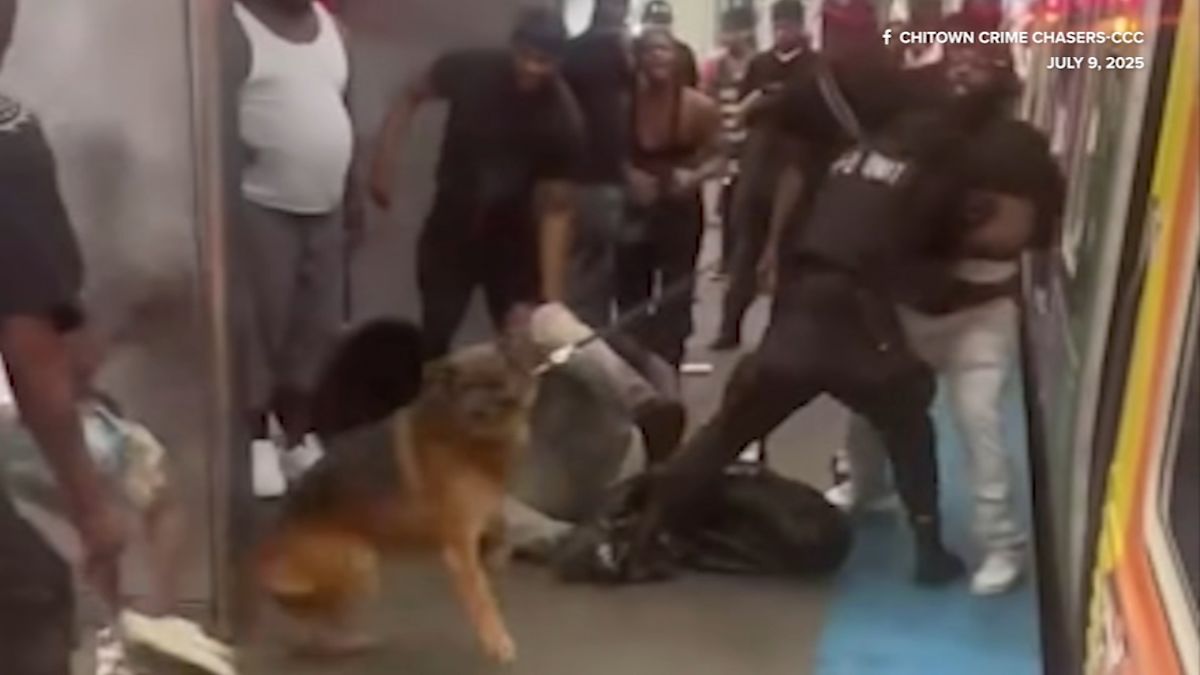
Among the disclosed files were records surrounding a chaotic confrontation that took place on July 9, 2025, at the Red Line's 69th Street station. The platform altercation between four men and private security personnel escalated into a violent melee featuring flying punches, thrown waste bins, a handler tumbling onto the live train tracks, and a German Shepherd biting both suspects and handlers without command.
The platform fight gained widespread public attention after video of the brawl was published on social media by the group Chitown Crime Chasers, sparking an influx of messages from riders demanding accountability and questioning the adequacy of handler training. However, the newly released records revealed that transit staff marked these serious complaints as officially closed within roughly 24 hours, leaving no written record of any substantive investigation.
Concerns regarding canine readiness extended beyond the general public and reached inside the transit agency itself. In one notable complaint turned over in the records, a senior attorney employed by the CTA reported encountering an Action K9 unit with an animal deemed unfit for active duty, noting that the muzzled dog was aggressively barking, lunging, and growling at passing commuters.
The documents also exposed persistent behavioral complaints regarding human guard conduct unrelated to the animals. Commuters reported incidents of security personnel neglecting their assigned surveillance duties, as well as instances of active harassment on platforms, including an account from a rider who observed guards verbally catcalling women passing through the station.
Both the CTA and Action K9 Security declined requests for on-camera interviews regarding the findings. In a written statement, a representative for Action K9 asserted that several of the disclosed complaints had been erroneously attributed to their company rather than other private security vendors, maintaining that any complaints connected to their staff were deemed unfounded following thorough internal review.
For its part, the CTA maintained that it immediately opens investigations into all passenger complaints submitted through its reporting channels. Nevertheless, the prolonged legal battle required to obtain basic oversight records continues to fuel criticism from transparency advocates and daily commuters who rely on the transit system.





(0)