
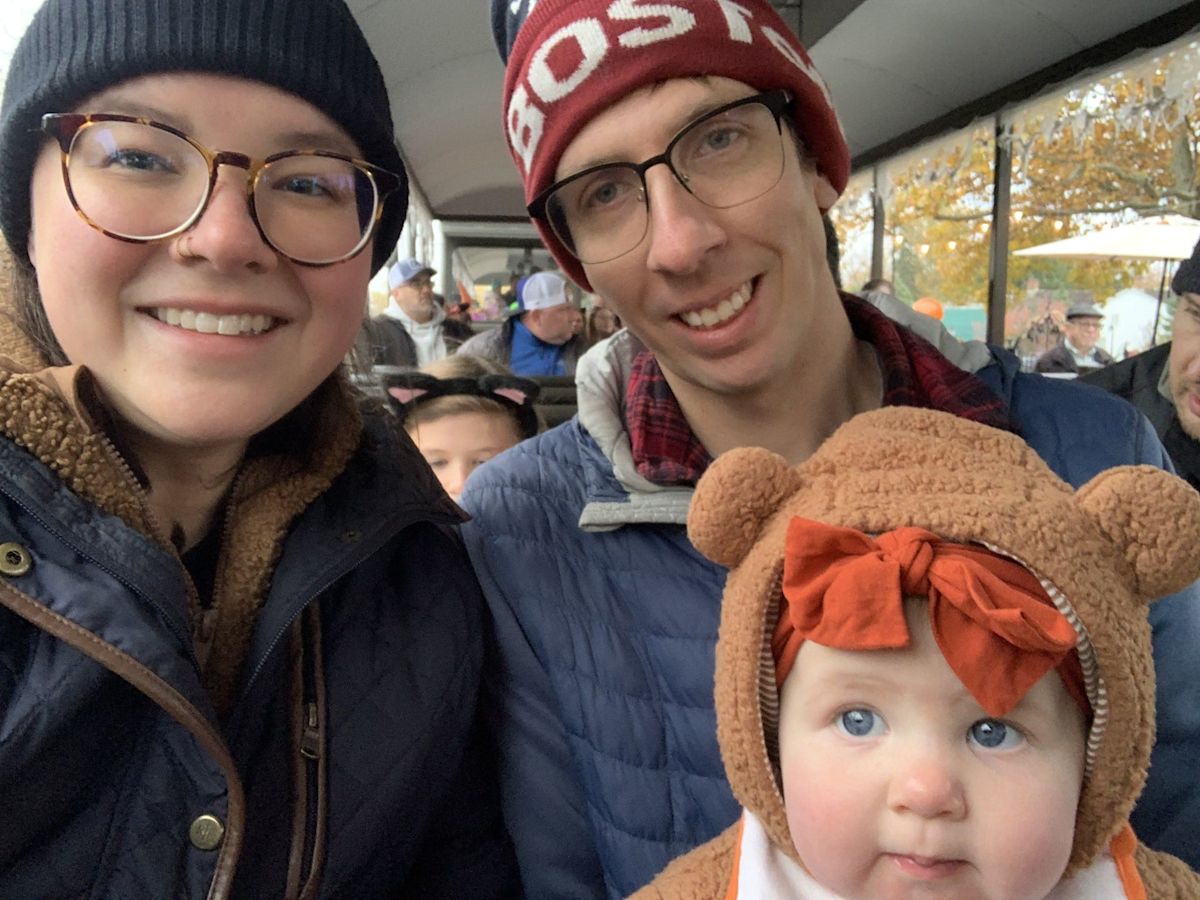
When Rachael Lang married her husband, she envisioned starting a family right away. However, those plans were suddenly halted nine months after her wedding day when she was diagnosed with breast cancer in 2018 at the age of 26. After enduring medical treatments, freezing her eggs, and finding a close friend willing to serve as a gestational surrogate, Lang and her husband, Alex, prepared to welcome their child into the world.
In 2023, the couple celebrated the arrival of their biological daughter, Delaney. While Lang became a mother in spirit and in daily practice the moment Delaney was born, the legal system treated the family very differently. Because of complex and outdated state parentage laws, it took two full years of legal hurdles, administrative delays, and mounting frustration for Lang and her husband to officially adopt their own daughter.
The bureaucratic complications began almost immediately after Delaney’s delivery. It took two weeks for the Langs to secure legal guardianship of their newborn. During that interim period, Delaney’s original birth certificate was mailed directly to their surrogate, listing the surrogate and the surrogate's husband as the baby girl's legal parents.
This lack of immediate legal recognition triggered significant logistical and medical obstacles during Delaney's first days. Because they lacked formal parental status, the Langs were legally barred from making medical decisions for their daughter at birth. Furthermore, they were unable to add the infant to their family health insurance policy until guardianship was formally established.
Instead of spending those initial, precious hours bonding with their newborn daughter, the Langs were forced to spend Delaney's birth day consulting with attorneys. Lang, now 34, recalled the overwhelming emotional toll of the process, describing moments such as breaking down in tears in a work parking lot after receiving phone calls from her lawyer explaining that the adoption had been delayed yet again.
The Langs' multi-year ordeal illustrates a broader national challenge confronting families formed through assisted reproductive technologies. While many hopeful parents turn to surrogacy, in vitro fertilization, and other fertility treatments to build their families, the state laws governing legal parentage often remain severely outdated and inconsistent across geographic borders.
Advocates argue that these statutory gaps leave both children and parents without adequate legal security. Patience Crozier, the director of family advocacy at GLBTQ Legal Advocates & Defenders, is among those campaigning to modernize state parentage policies so that all children are fully protected under the law regardless of the medical or relational path through which they joined their families.
Crozier highlighted that millions of children across the country are conceived and born through fertility healthcare, including donor conception, IVF, and gestational surrogacy. She emphasized that the legal architecture of the United States ties essential rights directly to the recognized parent-child relationship, making statutory protections indispensable.
When parentage is not legally secured from birth, families face severe practical disruptions. Crozier noted that parents without recognized legal status may be denied parental leave, blocked from enrolling their children in school, barred from authorizing emergency medical care, and prevented from securing vital health insurance coverage for their dependents.
The risks inherent in ambiguous parentage laws were recently underscored by a high-profile legal dispute in Texas involving a surrogate named West. In that case, the intended parents maintained custody of their baby boy from birth, but West initiated a legal fight seeking parental rights to make medical decisions for the child.
Crozier described the Texas litigation as a tremendous and highly politicized tragedy, while pointing out that such legal disputes remain rare outliers in the surrogacy field. According to Crozier, the vast majority of surrogacy agreements across the country are carried out smoothly and collaboratively between intended parents and surrogates.
Nevertheless, cases of conflict expose structural vulnerabilities in the existing surrogacy system. Mariam Shahab, fractional chief marketing officer for The Surrogacy Foundation and a mother who had her own son via surrogacy, noted that such controversies demonstrate why clearer regulations and stronger safeguards are necessary to make family building safer for everyone involved.
A major model for state-level reform is the Uniform Parentage Act, which was comprehensive updated in 2017 to provide clear legal pathways for children born through surrogacy, IVF, adoption, and within LGBTQ+ households. Despite its availability as a blueprint, not all states have adopted the 2017 version or passed comparable legislation to protect modern family structures.
Encouragingly, Crozier observed that state legislators from across the political spectrum have gradually begun embracing updates to parentage statutes. Lawmakers are increasingly recognizing the necessity of shielding children from bureaucratic harm and understanding the real-world fallout that occurs when legal parentage is delayed or denied.
Advocates also emphasize that language matters deeply in both personal and legal contexts, noting that outdated terminology can obscure the true dynamics of assisted reproduction. For families like the Langs, modernizing these laws and terminology remains critical to ensuring that legal recognition immediately matches the reality of their parent-child bonds.





(0)