
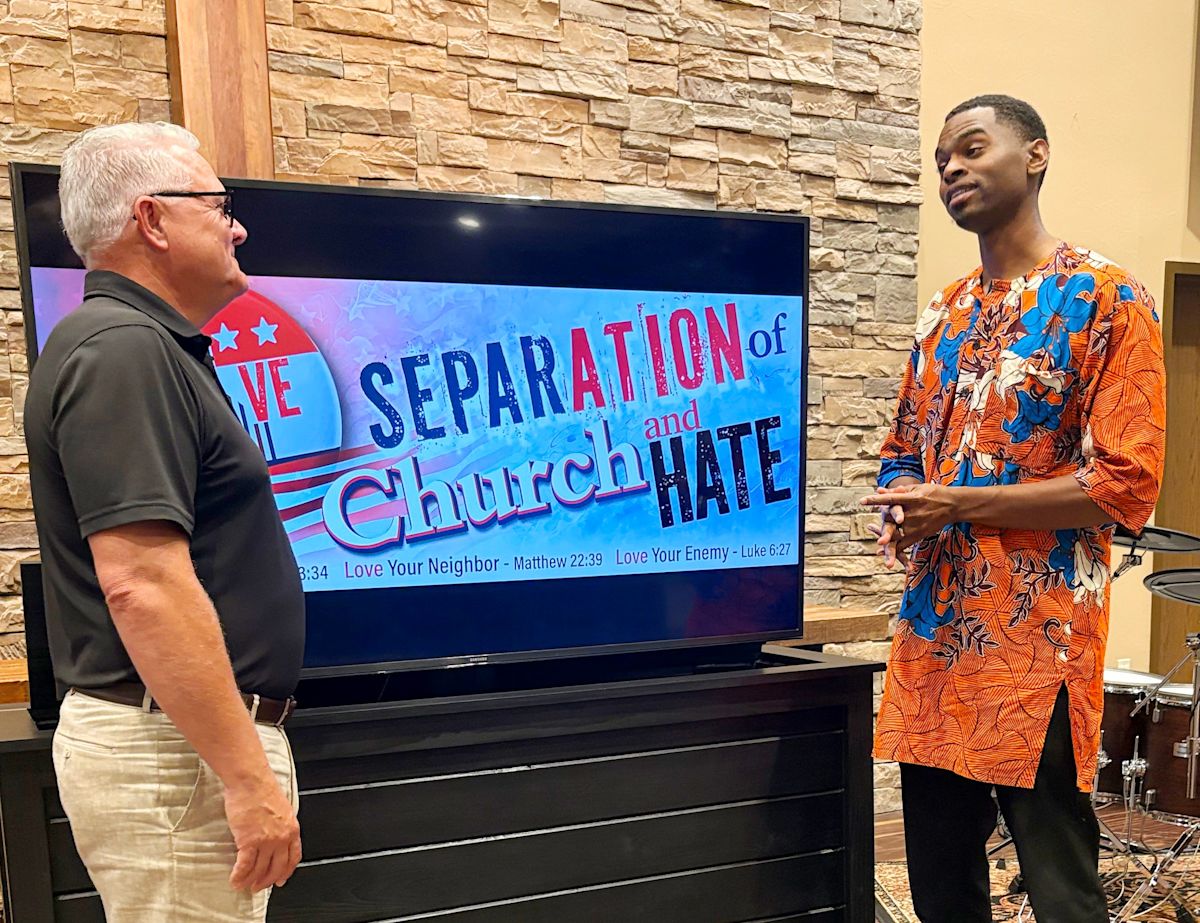
In response to a growing wave of political advertising and campaign literature invoking religious imagery to sway voters, several Christian clergy members across Oklahoma are taking a stand against the political use of their faith. Ministers throughout the region are utilizing their pulpits to address the intersection of religion and politics directly, urging their congregations to critically evaluate political messages that claim to represent Christian principles.
The pastoral response comes after thousands of Oklahoma households received political mailers declaring that supporting a specific candidate equates to voting for Christian values. At the same time, television campaign advertisements have increasingly featured political candidates walking through church sanctuaries and openly asserting their Christian identity to appeal to the electorate.
These widespread campaign strategies have generated notable concern among local faith leaders who have watched the trend unfold during the election season. Rather than viewing these gestures as authentic expressions of personal devotion, several ministers worry that sacred religious beliefs are being opportunistically repurposed as campaign tools designed primarily to capture votes.
Among those voicing significant concern is the Rev. Mark Foster, senior pastor of Acts 2 United Methodist Church in Edmond. Foster has openly questioned the messaging frequently found in campaign materials, emphasizing that the phrase "Christian values" is often used broadly without clear definition or theological substance.
Foster observed that while voters regularly receive mail claiming a vote for a candidate is a vote for Christian values, very little explanation is provided regarding what those values actually entail. He raised the question of whether such claims reflect biblical priorities, such as feeding the hungry, extending assistance to neighbors, welcoming strangers, or caring for immigrants.
In reviewing the rhetoric used in contemporary political races, Foster pointed out that candidates frequently engage in selective interpretation. He noted that individuals who claim to champion Christian values often pick and choose which principles to emphasize, while rarely reflecting the specific teachings of the Beatitudes recorded in the fifth chapter of the Gospel of Matthew.
To address these concerns directly with his parishioners, Foster introduced a new sermon series at Acts 2 United Methodist Church titled "Separation of Church and Hate." The educational effort is structured to provide the congregation with the spiritual guidance needed to thoughtfully assess religious claims in the political arena.
According to Foster, the objective of the sermon series is to help church members develop the discernment required to separate individuals who embody authentic Christian values from those who merely profess faith for the sake of political advantage.
The initiative at the Edmond church has also featured outside perspectives to support its mission. Guest speaker Julian Davis Reid participated in the series, delivering a message to the Acts 2 congregation before engaging in discussions with Foster regarding the campaign season's religious dynamics.
Foster delivered a direct warning to his congregation during the debut of the "Separation of Church and Hate" series on Sept. 6. He cautioned attendees that it is both wrong and dangerous for political figures to co-opt the faith of Christ's love over the subsequent nine weeks of campaigning in order to merge Jesus with meanness.
The series at Acts 2 United Methodist Church is part of a wider effort among Oklahoma congregations to counter divisiveness and hostility. Pastors across the state are actively developing programming aimed at opposing hateful rhetoric and confronting ideologies such as Christian nationalism as candidates increasingly lean on religious identity to secure electoral backing.
Joining this collective pastoral effort is the Rev. David Wheeler, senior minister of New Covenant Christian Church (Disciples of Christ). Like Foster, Wheeler is guiding his congregation through a focused examination of how genuine faith ought to function within the broader public sphere.
Wheeler scheduled his own topical sermon series to begin on Sunday, Sept. 13, titled "Faith Was Never Supposed to be Silent: Justice is What Faith Sounds Like in Public." The series highlights the belief that authentic religious conviction requires vocal engagement centered on justice rather than political exploitation.
Through these coordinated sermon series and open discussions, Oklahoma pastors are actively working to protect the integrity of their religious tradition. By encouraging churchgoers to look beyond partisan slogans and focus on biblical teachings of compassion and justice, these leaders hope to resist the political co-optation of the Christian faith.







(0)