
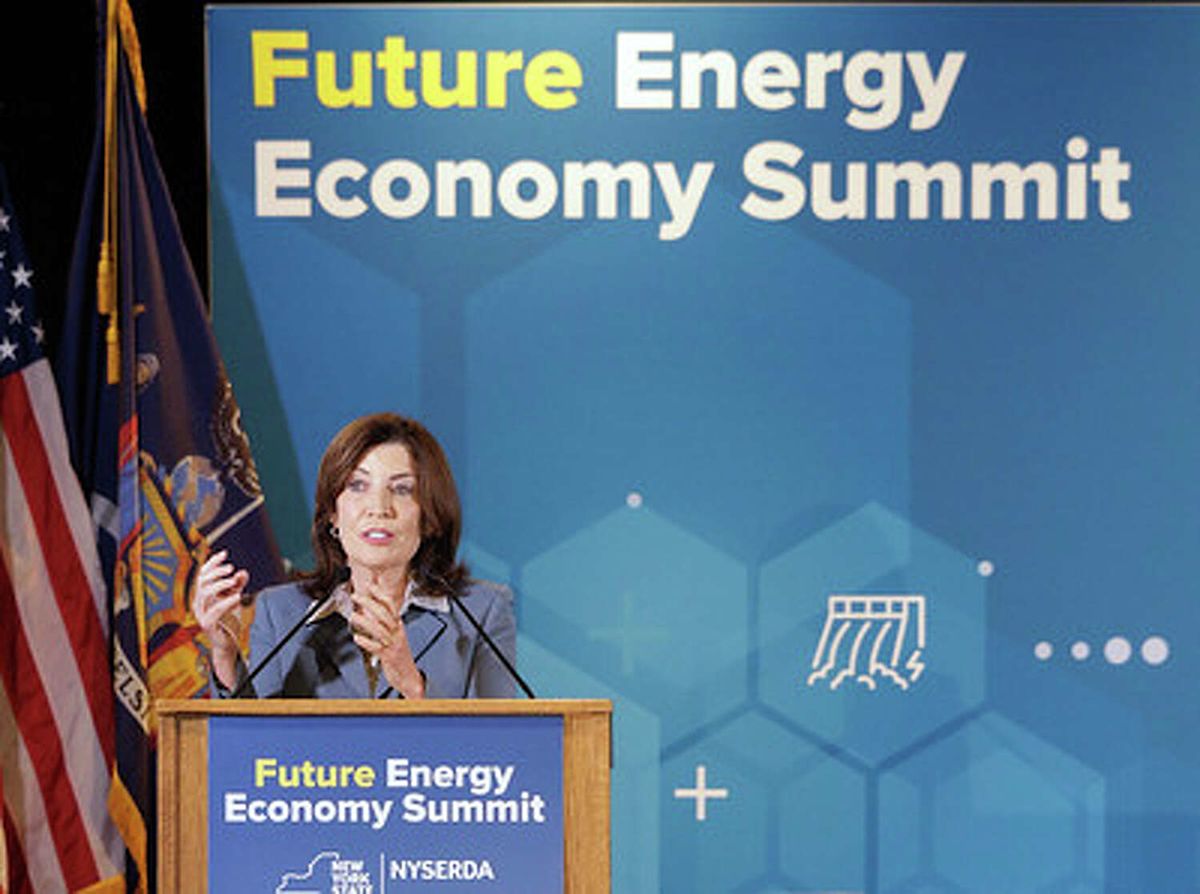
More than eight million households across New York will soon begin receiving direct financial assistance in the form of state-issued energy rebate checks worth up to $200, according to an announcement from the administration of Governor Kathy Hochul. The initiative marks the second consecutive year that state leadership has dispatched direct payments to taxpayers within specific income brackets.
The program, backed by $1 billion allocated in the enacted state budget, is scheduled to commence mailings on September 21, with distribution continuing through December. State officials indicated that the disbursements are designed to offset escalating residential utility rates and elevated fuel costs that have placed a sustained strain on family budgets throughout the state.
Under the framework established for the relief program, payments are tiered according to household earnings and tax filing status. Married couples filing jointly with an annual income under $150,000 are eligible for the maximum rebate of $200, while joint filers reporting earnings between $150,000 and $300,000 will receive $150. Individual filers earning less than $150,000 are designated to receive $100 checks.
Recipients do not need to submit a formal application to collect the funds. The New York State Department of Taxation and Finance will issue the checks automatically based on personal income tax records. To qualify, individuals must have filed their 2024 state income tax returns on time, maintained full-time state residency during that tax year, remained within the specified income caps, and not been claimed as a dependent on another filer's return.
State Department of Taxation and Finance Commissioner Amanda Hiller characterized the payments, also referred to as power checks, as an essential mechanism for extending financial support to residents navigating difficult economic conditions. Administration officials emphasized that the fiscal measures in the budget aim to prioritize working families over large utility corporations.
The rebate initiative comes amid stark data regarding energy expenses in the state. Findings published by the Empire Center for Public Policy, an Albany-based independent think tank, reveal that New York's residential electric rates exceed the national average by roughly 70 percent. Drawing from Energy Information Administration figures, the organization noted that average home electricity costs in New York stood at approximately 29.99 cents per kilowatt hour, compared to a nationwide average of 17.6 cents per kilowatt hour.
The regional disparity is equally pronounced when compared to neighboring and southern states. According to the Empire Center's analysis, New York residential electricity expenses run approximately 50 percent higher than those in Pennsylvania and are nearly double the average electric utility rates paid by consumers in Texas and Florida.
In defending the program, Governor Hochul framed the disbursements as an integral component of her broader affordability agenda, pointing to external economic pressures. The governor pointed to federal political dynamics and broader market disruptions, asserting that state-level action remains necessary to ease the cost of living for residents facing expensive grocery, utility, and fuel bills.
The governor's office also linked the current financial strain to international market volatility, noting that retail gasoline prices in the state have averaged around $4.35 per gallon. Administration officials observed that this figure represents an approximate 45 percent increase following the outbreak of conflict in Iran, adding compounding fuel costs to the existing burdens of home heating and electric bills.
The deployment of the 2026 energy rebates mirrors a similar relief effort enacted by Hochul and state lawmakers last year. In that previous cycle, the state distributed "inflation refund checks" valued at up to $400 to the same demographic of income-qualified residents. With this latest round of funding, state officials calculate that New York has delivered approximately $7.6 billion in direct utility assistance and energy rebates to households since 2021.
Despite the administration's stated goals, the timing and execution of the payments have drawn substantial criticism from political opponents. Critics have argued that issuing one-off taxpayer checks immediately preceding general election cycles serves as a short-term political gesture rather than a comprehensive remedy for persistent inflation and high energy tariffs.
Assembly Minority Leader Ed Ra publicly challenged the initiative, arguing that mailing checks less than two months before the election represents an effort to gain political advantage while leaving fundamental energy issues unaddressed. Ra asserted that while taxpayers need economic assistance, the $200 maximum rebate offers minimal relief to residents facing electric bills far above national standards and fails to tackle broader grid reliability or systemic price drivers.
Internal political friction has also surfaced regarding the strategy of direct cash payments. Lieutenant Governor Antonio Delgado, who previously ended a primary challenge against Hochul, had voiced skepticism toward one-off relief distributions during the prior year's rollout. Delgado argued that temporary refund checks function primarily as political spectacle, advocating instead for substantial, long-term investments in essential services such as healthcare, housing, and childcare.
While several legislative Republicans backed the authorization of the energy rebates as part of their own broader proposals to combat utility rates, conservative lawmakers continue to challenge the Democratic majority's broader energy transition strategy and regulatory policies.
As the state begins mailing checks to millions of mailboxes this month, the debate continues over whether temporary tax rebates provide meaningful economic shelter or merely defer the structural reforms needed to stabilize the state's energy grid and lower long-term utility costs.




(0)