
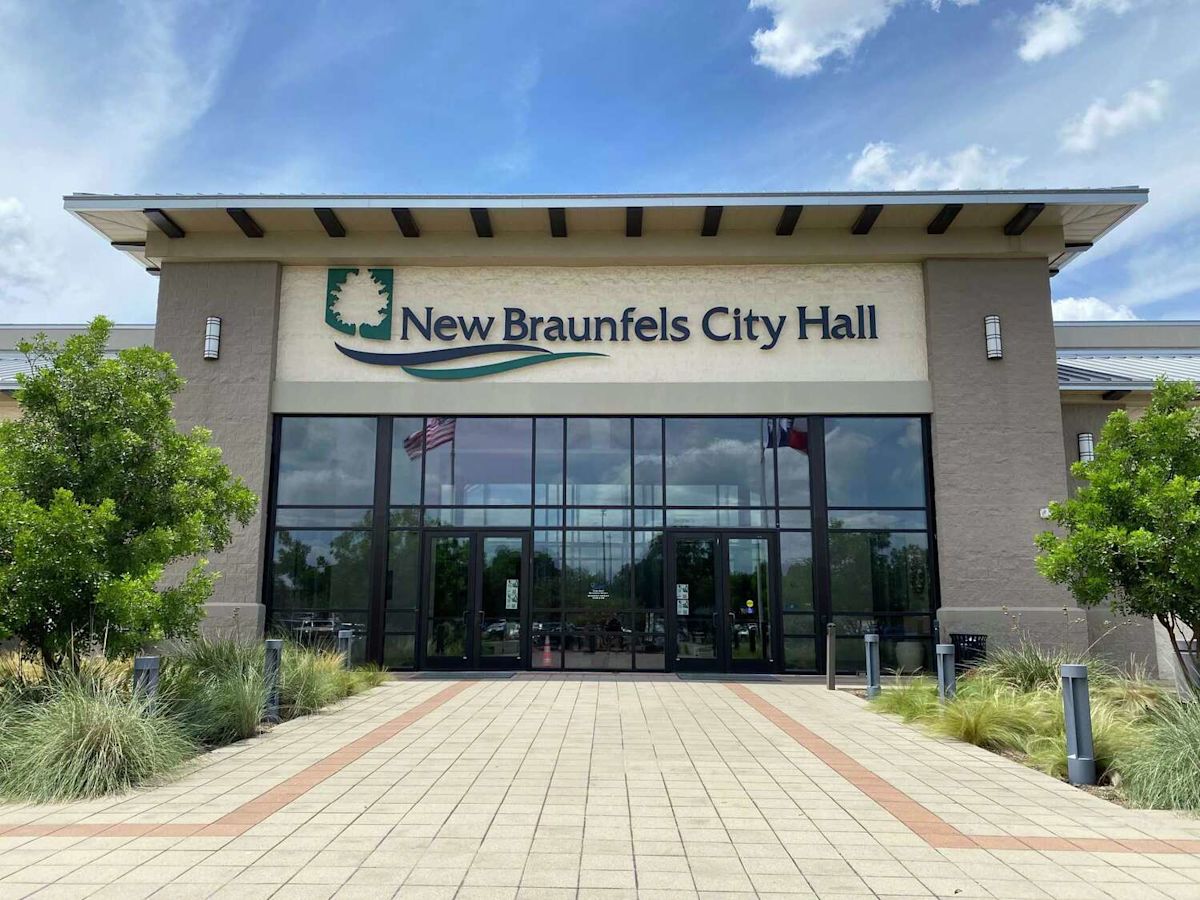
The New Braunfels City Council has decided against granting a substantial utility fee waiver to the developers of a proposed affordable housing complex, though local leaders emphasized their ongoing commitment to making the residential development a reality through alternative financial strategies.
The development under consideration, known as Park at Dogwood, is envisioned as a 76-unit apartment community situated at 1869 McQueeney Road. Managed by The Park Companies, the project is designed to expand the availability of low-income housing in the region, but it currently faces a daunting $2 million funding shortfall that threatens its progress.
According to Jeff Jewell, the director of economic and community development for New Braunfels, the overall construction and development budget for the apartment community stands at approximately $22.3 million. While the vast majority of the capital was slated to come from federal tax incentives, unexpected logistical setbacks have disrupted the original financial blueprint.
Federal Low-Income Housing Tax Credits were originally secured for the development in 2024, with expectations that they would generate roughly $17.6 million in funding. However, the timeline suffered major disruptions when the Federal Emergency Management Agency introduced revised floodplain designations across the surrounding area. These modifications forced architects and engineers to redesign the property, delaying the construction timeline and reducing the projected tax credit proceeds to around $15.7 million.
In an effort to bridge the resulting multimillion-dollar gap, The Park Companies formally requested that municipal officials and New Braunfels Utilities excuse up to $500,000 in mandatory infrastructure impact charges. The standard development impact fees assessed for the 76-unit project total approximately $1.3 million, meaning the requested relief would have amounted to a reduction of nearly 40 percent.
Impact fees are standard assessments levied on new construction to ensure that the broader community infrastructure can handle additional capacity demands. Because New Braunfels Utilities is a municipally owned entity responsible for water, wastewater, and electric services, its formal policy stipulates that any board decision regarding fee waivers must first receive a recommendation from the city council.
During their Monday meeting, council members voted unanimously 5-0 to advise the utility board against approving the requested fee waiver. At the same time, the council formally instructed municipal staff to explore alternative funding channels to assist the developer in overcoming the deficit. Both Mayor Michael French and Councilwoman Toni Carter were absent from the proceeding.
The utility waiver was not the only financial concession considered in official municipal documents. The city has also weighed the possibility of waiving approximately $250,000 in roadway impact assessments. Furthermore, Jewell noted that the developer has already established an agreement with the New Braunfels Housing Authority to grant the site an exemption from local property taxes, providing another crucial mechanism to trim the project's deficit.
Once completed, Park at Dogwood is designed to accommodate working families earning between 30% and 60% of the area median income. Depending on the size of the household, qualifying annual incomes would range from $21,000 to $54,000. Correspondingly, monthly rental rates across the units would be scaled from $424 to $1,196 based on the floor plan and the resident's earnings.
Despite broadly endorsing the social objectives of the affordable housing project, council members expressed serious reservations about using utility funds to subsidize private construction. Councilwoman Nikki Shaw highlighted the contradiction of granting impact fee exemptions while New Braunfels Utilities has implemented recurring annual rate increases for existing customers every year since 2023 to finance capital improvements.
Shaw voiced strong unease with the proposed fee reduction, observing that basic infrastructure expenses associated with growth cannot simply vanish and will inevitably require funding. As a viable alternative, she proposed that the New Braunfels Economic Development Corporation consider providing economic incentives to the project, utilizing its dedicated portion of municipal sales tax revenues established to foster community growth.
The public comment segment of the meeting featured sharp divisions among community members. Resident Eva Pepitone voiced opposition to the development, claiming that the influx of affordable units would place excessive burdens on neighborhood schools and local infrastructure. Pepitone also alleged that the complex would house a high proportion of single parents who would not be available after school hours to help their children with academic coursework.
Elected leaders firmly pushed back against those characterizations during deliberations. Councilman Michael Capizzi rejected the negative commentary, stating that such characterizations do not reflect the character of New Braunfels. He affirmed his support for the project as a necessary boost for residents in need, expressing his agreement with Shaw's recommendation to pursue alternative economic development funds rather than utility fee waivers.
Councilman D. Lee Edwards delivered a personal reflection on the transformative value of attainable housing, recalling his own early financial hardships. Edwards shared that in 1977, his family experienced a sudden loss of income, forcing him to move into a remote single-wide mobile home in South Carolina for $125 a month with an infant child. He emphasized that affordable developments serve as vital launching pads for ordinary families working to rebuild their economic security.
Other residents who addressed the council echoed the sentiment that while affordable housing serves an important community need, the costs should not be shifted onto standard utility customers through fee waivers. With council directing staff to review alternate incentive packages, municipal officials are now tasked with identifying funding solutions that can keep the Park at Dogwood project viable without placing additional strain on the city's utility system.





(0)