
Across the state of Iowa, a distinct architectural and social transformation is taking place as communities seek innovative ways to expand their residential capacity. Rather than allowing venerable, aging properties to fall into complete disrepair or face the wrecking ball, developers and community organizations are increasingly turning toward the adaptive reuse of historical infrastructure. This approach has enabled a diverse collection of long-standing civic, military, and religious landmarks to take on an essential modern assignment: bolstering Iowa's supply of affordable housing.
The growing movement toward repurposing existing architectural assets comes at a pivotal time for Midwestern communities balancing heritage preservation with urgent residential needs. By choosing restoration over new ground-up construction, developers are breathing renewed vitality into structures that once served entirely different community functions. These properties, which have stood as neighborhood focal points for decades or even over a century, are now being reimagined from the inside out to offer safe, accessible, and budget-friendly living environments.
Among the prominent examples illustrating this statewide initiative is a century-old religious and educational complex in Waterloo. The 102-year-old Catholic church and school, which once accommodated generations of students and parishioners, is being revitalized to contribute directly to the local affordable housing inventory. Repurposing a building of this vintage allows the surrounding neighborhood to maintain its historical and architectural identity while simultaneously confronting modern economic realities and housing shortages.
Further south, in the state capital of Des Moines, historic military architecture is experiencing a comparable reinvention. A former U.S. Army post that is nearly 130 years old is among the significant sites undergoing conversion into affordable living quarters. Transforming a former defense installation into residential spaces represents a creative solution to modern urban planning challenges, demonstrating that legacy military properties can be thoughtfully reconfigured to serve fundamental civilian needs.
Religious properties situated within key metropolitan corridors are also playing a central part in this adaptive trend. Just blocks away from the Iowa State Capitol in Des Moines, a 69-year-old Lutheran church is being integrated into the expanding network of affordable housing projects. Its strategic location near central government hubs ensures that future residents can benefit from urban access while preserving a mid-century community cornerstone.
The underlying catalyst driving these revitalization efforts lies within the demographic and structural characteristics of Iowa’s real estate landscape. Data compiled by the Iowa Finance Authority reveals that Iowa currently holds the eighth-oldest housing stock in the entire country. This statistical reality underscores the prevalence of aging properties across the region, presenting both an infrastructure challenge and a unique development opportunity.
According to the Iowa Finance Authority's findings, the median construction year for residential structures throughout the state is 1957. A median build date from the post-war mid-20th century highlights the mature nature of the state's existing inventory. As a result, Iowa contains a substantial volume of older properties that have reached a stage where extensive renovation, adaptive conversion, or structural reimagining becomes essential to maintaining community utility.
Alongside this mature housing inventory, the state has an extensive supply of underutilized, vacant, and aging non-residential buildings. Rather than pursuing cost-intensive new construction on raw land, a growing number of developers are choosing to harness this existing built environment. Restoring sturdy historical properties circumvents some of the high costs and resource demands associated with building from scratch, while simultaneously preventing valuable urban properties from sitting abandoned.
One of the most impactful initiatives exemplifying this adaptive reuse model is taking shape through the efforts of the Des Moines-based non-profit organization Starts Right Here. Spearheaded by founder Will Keeps, the group has embarked on an ambitious initiative designed to combine accessible living quarters with comprehensive educational support under one roof.
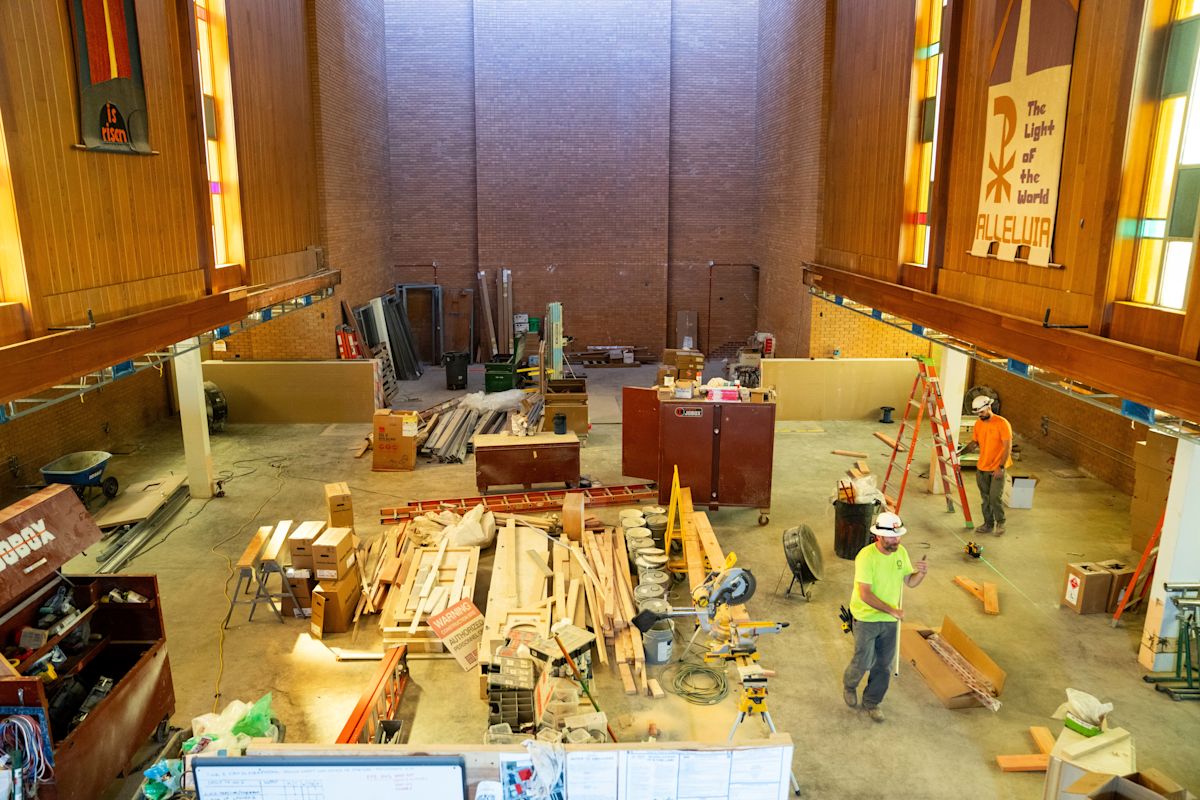
Known as "Stay," this youth-focused project is actively transforming the site formerly occupied by the Elim Christian Fellowship church. By taking the former church building and adapting its interior layout, the organization is engineering a multi-faceted community hub centered on educational resources and secure accommodations. The conversion exemplifies how religious structures, often possessing solid foundations and expansive spaces, can be repurposed to address pressing youth welfare issues.
The mission of Stay by Starts Right Here focuses specifically on delivering affordable youth housing for at-risk individuals who might otherwise lack stable living conditions. Founder Will Keeps has emphasized creating an environment where vulnerable young people can access dependable shelter while simultaneously working toward personal and academic development, providing a vital stepping stone toward long-term self-sufficiency.
Construction on the Stay project has progressed significantly, with on-site work inside the former church actively underway as of late August 2026. Design renderings and physical unit buildouts showcase the transition of the former religious complex into functional, dedicated youth residences. The visible momentum at the site highlights how quickly underused community spaces can be mobilized to address acute social and residential vulnerabilities.
For urban developers and community leaders, retrofitting historic architecture into residential units presents distinct advantages over starting from ground zero. Converting historic church buildings, former military compounds, and legacy schoolhouses preserves the character of established neighborhoods. Rather than leaving vacant structures to deteriorate—which can depress local property values and invite community blight—restoration breathes active civic life back into forgotten corridors.
Furthermore, incorporating specialized supportive programming—such as the educational component woven into the Starts Right Here project—demonstrates that housing initiatives can offer more than just shelter. By addressing both the structural deficit in housing and the developmental needs of specific demographics like at-risk youth, adaptive reuse projects can generate lasting positive social outcomes across the community.
From the historic civic centers of Waterloo to the urban corridors surrounding the Capitol in Des Moines, Iowa's approach to its aging real estate demonstrates a resourceful path forward. By leveraging the state's considerable inventory of pre-existing, mature structures, planners and developers are building a more inclusive housing landscape without sacrificing the state's deep architectural heritage.
As these diverse conversion projects continue to advance across the state, Iowa is establishing a model for how legacy infrastructure can solve contemporary social issues. Whether converting century-old military barracks, mid-century parish churches, or long-standing parochial school classrooms, the state is demonstrating that the key to unlocking future affordable housing supply may well lie within the preservation of its historical past.








(0)