
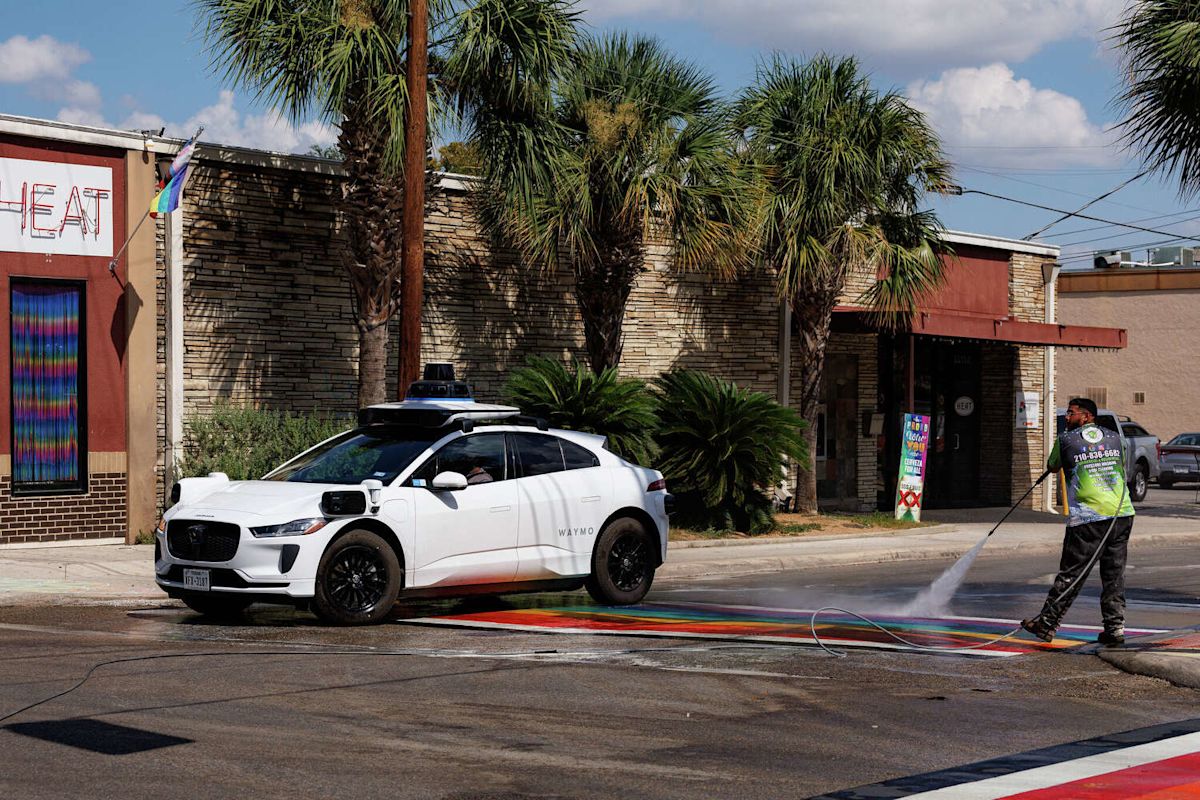
Newly disclosed law enforcement documentation reveals that Waymo’s fleet of autonomous robotaxis encountered persistent navigation issues, blocked roadways, and prompted dozens of emergency dispatch calls throughout San Antonio prior to the company suspending its local ride-hailing service. A comprehensive review of 270 pages of municipal police records underscores the operational hurdles confronting self-driving technology as it attempts to integrate into urban street grids designed strictly for human motorists.
The Alphabet spinoff officially halted passenger operations in April after a severe weather incident in which an autonomous vehicle was swept off a flooded thoroughfare. While commercial transport remains offline, Waymo has continued to conduct technical trials across San Antonio using its specialized fleet of all-electric Jaguar I-PACE sport utility vehicles equipped with autonomous driving hardware.
According to municipal logs, the vast majority of emergency dispatches involved Waymo vehicles coming to an unexpected halt and blocking traffic lanes. However, the documentation also catalogs a wider variety of driving dilemmas, including vehicles stranded in rising water, reports of wrong-way maneuvering, reckless driving complaints, and three separate collisions involving cats.
Despite these driving complications, the white autonomous SUVs have not caused any human injuries while operating in self-driving mode within the city. The only major human casualty recorded in the files occurred during an April incident when a pedestrian sustained injuries requiring hospitalization after being struck by a Waymo vehicle that was under the manual control of an onboard human driver.
The public records reveal that Waymo’s autonomous systems frequently relied on outside human assistance to resolve complex road scenarios. Between June 2025 and April, emergency personnel logged at least 24 distinct calls regarding automated vehicles coming to an unintended stop in active intersections, multi-lane roadways, residential driveways, and highway shoulders across the company’s designated 60-square-mile operational territory.
Dispatch patterns indicate that these traffic disruptions were predominantly clustered along several of the city's key thoroughfares and near-downtown transit arteries. Problem areas frequently cited in municipal logs included Austin Highway, San Pedro Avenue, Basse Road, New Braunfels Avenue, Harry Wurzbach Road, and frontage segments flanking Interstate 35.
In multiple instances, the vehicles stalled when confronted with malfunctioning municipal infrastructure or non-standard traffic patterns. On April 3, two separate robotaxis became immobilized at the intersection of Burr and Wurzbach roads when an overhead traffic signal froze on a red light, forcing human drivers to maneuver around the halted fleet. Just five days later, another Waymo vehicle was immobilized near Basse Road and McCullough Avenue after railroad crossing safety gates malfunctioned.
Other incidents required physical intervention by law enforcement officers to restore normal traffic conditions. In early February, two patrol officers were dispatched to an Interstate 35 frontage road where a disabled autonomous SUV had stalled, prompting the officers to manually move the vehicle out of the path of oncoming traffic. During another April occurrence, two Waymo cars were reported blocking traffic diagonally near New Braunfels and Cloverleaf avenues, though both vehicles had departed before patrol units arrived.
An analytical breakdown of the 24 primary traffic obstruction calls reveals varying operational outcomes. In 12 instances, the robotaxis had already cleared the roadway before responding officers reached the scene. Nine calls necessitated direct physical or dispatch coordination involving officers, dispatch staff, or Waymo roadside personnel, while two lacked clear resolution details and one was categorized by authorities as not presenting an active traffic hazard.
Waymo representatives have pushed back against interpretations suggesting that police logs equate to flawed vehicle software. Company spokesman Nye Davidson emphasized that law enforcement call logs present an incomplete view of overall fleet safety. Davidson noted that the records often fail to indicate whether follow-up action was truly needed, adding that the company disputes framing the logs as dozens of operational failures directly attributable to Waymo's underlying technology.
To address ongoing operational friction between autonomous fleets and emergency services, municipal agencies have sought proactive coordination. San Antonio police and fire departments conducted dedicated training sessions with Waymo representatives in late 2025 to educate local emergency personnel on proper protocols for handling and safely clearing autonomous vehicles during crisis situations.
Public perception of these interactions has also sparked periodic confusion on social media. After images recently circulated online showing a marked police vehicle parked behind a Waymo SUV near San Pedro Avenue and West Elmira Street, police officials clarified that the vehicle was not subject to an enforcement stop. Police department spokeswoman Julyssa DeLuna confirmed that the autonomous SUV was already stationary and the responding officer merely assisted in moving it safely.
The documented road struggles in San Antonio coincide with heightened scrutiny across the autonomous driving industry. Federal regulators at the National Highway Traffic Safety Administration have issued warnings to robotaxi operators regarding vehicle interference with emergency responders, even as competition expands with companies like Tesla securing municipal site approvals for autonomous ride networks near San Antonio International Airport.






(0)