
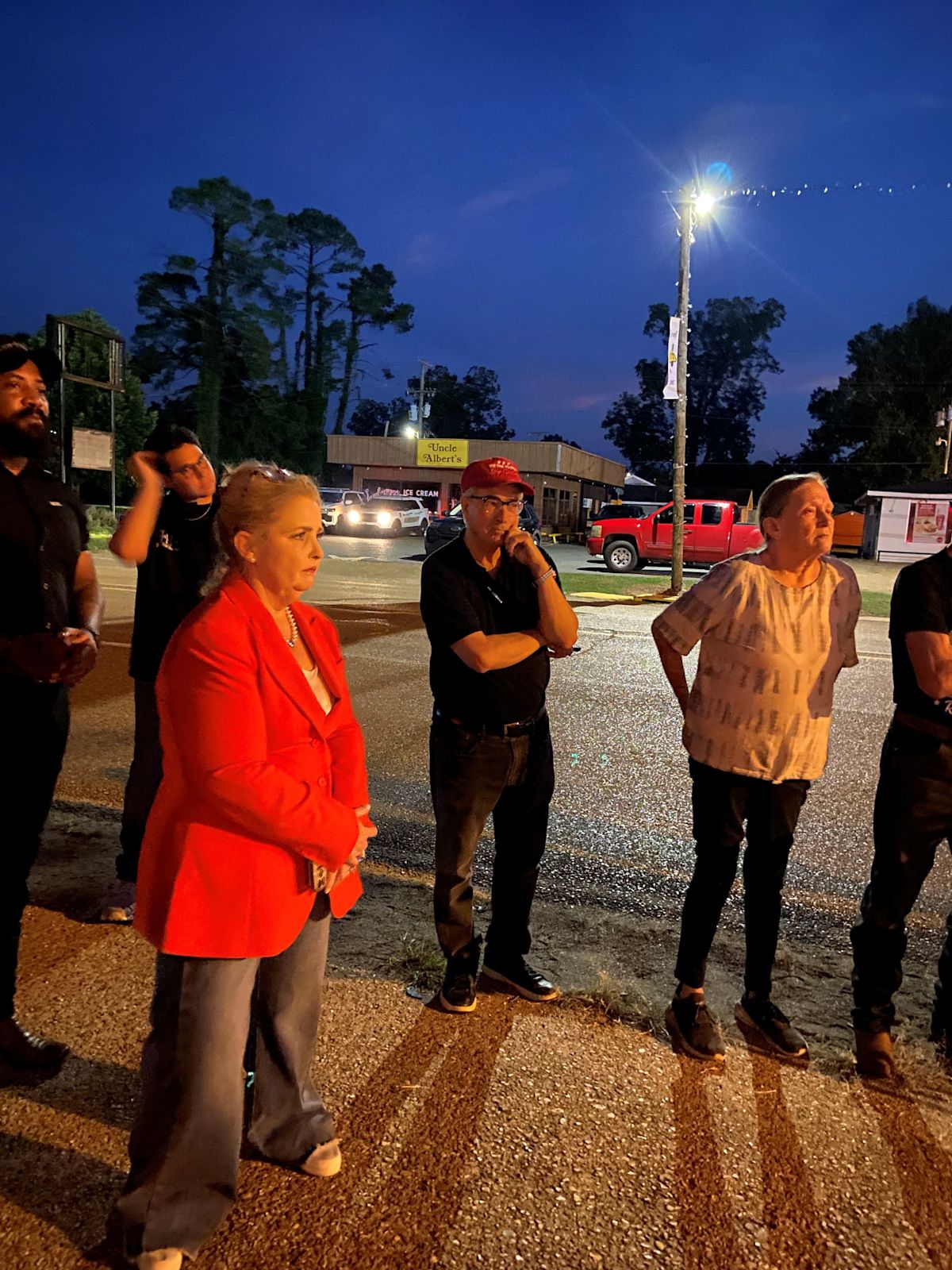
Residents and grassroots activists gathered in a parking lot in Boyce, Louisiana, over the weekend to voice growing frustration over large-scale technology projects, asserting that everyday citizens are being systematically shut out of critical infrastructure decisions. The assembly marked the latest stop on a multi-city campaign aimed at confronting the rapid domestic expansion of artificial intelligence facilities and demanding greater local oversight for host communities.
Amy Kremer, chair of the conservative organization Humans First, served as a headline speaker for the gathering, which was organized as part of her nationwide "AI Data Center Revolt" tour. Addressing the assembled attendees, Kremer clarified that her movement does not oppose technological advancement or artificial intelligence as a concept, but rather challenges the top-down manner in which industrial facilities are being placed in rural and residential areas without meaningful public consent.
During her remarks, Kremer highlighted the deep national resources underpinning the current technological surge. She argued that modern artificial intelligence capabilities have been developed through the utilization of American data, domestic land, natural resources, power grids, and extensive taxpayer funding. Despite those foundational public contributions, she stated that ordinary citizens have been left without a meaningful voice or a seat at the negotiating table regarding how such infrastructure impacts their daily lives and regional environments.
Kremer further criticized corporate entities and decision-makers for imposing heavy technological infrastructure on small municipalities. Describing the trend as an unwanted intrusion into local communities, she maintained that residents must be granted the ultimate authority to determine whether they want massive commercial data operations established within their borders.
The advocacy group Humans First characterizes itself as a grassroots conservative coalition working toward an "America First AI policy." Rather than pushing for blanket legislative prohibitions, Kremer explained that the organization is not seeking federal or statewide bans on data facilities. Instead, the group advocates for strict local autonomy, asserting that municipalities should retain the democratic power to elect local officials who either approve or reject facility permits according to the community's collective wishes.
The stop in Boyce represented the second official destination on the "AI Data Center Revolt" national tour, which is scheduled to conclude in Washington, D.C., on September 16. The cross-country campaign originated last week in Dallas during a mini Republican convention before holding its inaugural stop in Austin and subsequently traveling into Rapides Parish, Louisiana.
The specific focus of the demonstration in Boyce centered on "Data Forge 1," an expansive $3.6 billion AI factory data center currently being constructed just outside the town limits on former agricultural land. The high-capacity facility is being developed by Applied Digital, a technology infrastructure enterprise based out of Dallas, Texas.
Local tensions regarding the project have been simmering for months following an informational public meeting held in Boyce this past June. During that earlier outreach session, representatives from Applied Digital, regional economic development group Louisiana Central, and local utility Cleco appeared before residents to outline the scope of the project, explain prospective operations, and discuss potential economic returns for Rapides Parish.
However, that corporate presentation did little to assuage the apprehensions of local residents, meeting with widespread skepticism from those who attended. The skepticism voiced during the summer forum was clearly echoed during Saturday evening's demonstration, where speakers emphasized recurring concerns regarding regional power reliability, transparency, and the use of private property.
Among the community leaders speaking at the event was Gary Musgrove, president of Save My Louisiana. Originally established in 2025 to oppose carbon capture and sequestration developments, the grassroots group broadened its focus to include data center projects due to concerns over property rights and massive electrical load demands.
Musgrove focused extensively on the utility agreement between Applied Digital and Cleco, noting that the utility has contracted to deliver 430 megawatts of electricity to power Data Forge 1. According to Musgrove, that substantial volume of power is equivalent to the electrical consumption of approximately 250,000 households, constituting an estimated 25% of Cleco’s total power generation capacity.
Questioning the strain on the regional power grid, Musgrove raised serious concerns over how Cleco plans to meet the contract's steep energy requirements without compromising public resources. He voiced fears that private land surrounding the development site could eventually face expropriation through eminent domain to construct the auxiliary infrastructure needed to deliver that high volume of electricity to the data center, even though eminent domain has not formally materialized as an issue thus far.
Musgrove also referenced past remarks made by Donald Trump regarding data center developments, noting the former president's perspective that while areas opposing such developments risk losing economic growth, the facilities themselves should be expected to produce their own electrical power. Citing those statements, Musgrove questioned whether Cleco will experience an energy deficit or if local residents will instead be forced to endure the continuous noise and environmental impact of roughly 196 power generators running on-site to provide the necessary 430 megawatts.
The Save My Louisiana president expressed continued dissatisfaction with the lack of clarity provided by project developers, noting that several direct questions regarding utility sourcing posed during the June informational forum went unanswered after corporate representatives claimed the requested operational specifics constituted proprietary information.
The Boyce demonstration brought together several other regional figures and area residents who gathered beside the tour bus, including local attorney Ed Tarpley and Dustin McAnn, an area rancher and schoolteacher who lives in LaSalle Parish and works within Rapides Parish. As the national tour moves on toward its upcoming stops, local organizers in Louisiana maintain that the fight over Data Forge 1 is far from settled.







(0)