
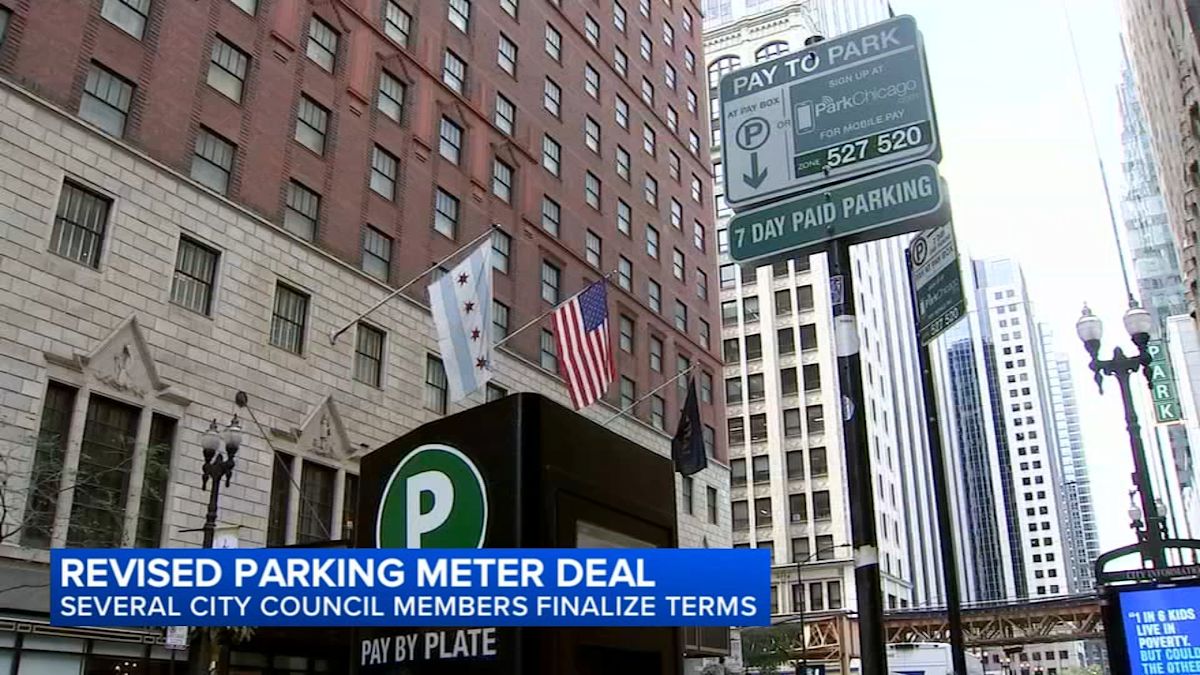
Chicago City Council members have negotiated a proposed agreement allowing New York-based investment firm Stonepeak Partners to take over the city’s long-privatized parking meter system. The revised deal establishes a profit-sharing structure designed to inject hundreds of millions of dollars into Chicago’s public coffers while addressing contentious ethical concerns surrounding federal immigration enforcement.
Under the negotiated terms of the transaction, the city would receive an immediate $75 million transfer fee once the sale is formally finalized. In addition to the upfront windfall, Chicago would secure a 5% share of the parking system’s annual net operating income. That ongoing revenue stream is projected to generate more than $376 million across the remainder of the original lease duration, with every cent legally earmarked to support the city’s strained pension funds.
The pending transfer represents a major turning point in the aftermath of the controversial 2008 agreement, which leased Chicago’s parking meters to Chicago Parking Meters LLC for a 75-year span. That initial long-term privatization has persisted as an enduring source of bitterness, public frustration, and fiscal regret for local lawmakers and residents alike.
Reflecting on the legacy of the original lease, 27th Ward Ald. Walter "Red" Burnett described the 2008 transaction as the most toxic deal in the history of Chicago. For many council members, the incoming buyer presented a rare opening to reclaim some value from an agreement that had long stripped the municipal government of control and revenue.
The new terms were forged over several months of discussions led directly by key City Council members working in coordination with the city’s law department. Proponents emphasized that this legislative-led strategy was intentionally adopted to ensure proper oversight and procedural clarity.
Supporters also pointed out that Mayor Brandon Johnson had no direct involvement in the negotiations. Johnson had launched an unsuccessful push the prior year to buy back the parking meters outright, an effort that prompted concerns among aldermen over transparency. As a result, council members chose to take charge of the process themselves.
Finance Committee Chair and 3rd Ward Ald. Pat Dowell explained the dynamic between the council and the mayor's office, stating that Johnson had thrown the opportunity into their lap. Dowell noted that council members took him up on the offer, completed the rigorous negotiation work, and now hope the mayor will actively support the finished product and help secure the votes necessary for passage.
Mayor Johnson declined to state directly whether he supports the finalized terms. He did, however, express gratitude and optimism regarding the package, stating that he is hopeful the City Council will find a workable path forward to deliver a better deal for Chicago taxpayers.
Other council members expressed strong backing for the newly drafted agreement. Alderman Scott Waguespack of the 32nd Ward called the arrangement a solid deal, acknowledging that while the agreement cannot erase everything that occurred over the last couple of decades, it positions the city on good footing for the decades ahead.
Beyond the financial provisions, the negotiations successfully resolved a major ethical standoff that had threatened to derail previous discussions. As a condition of the deal, Stonepeak agreed to divest from Omni Air International, an aviation contractor used during the Trump administration to carry out deportations on behalf of U.S. Immigration and Customs Enforcement.
The investment firm’s connection to deportation flights had previously sparked vehement pushback from several aldermen. Addressing the divestment, 22nd Ward Ald. Mike Rodriguez remarked that while he wants to see if fellow aldermen believe the concession goes far enough, he considers it a step in the right direction. Rodriguez noted that the overall proposal is in a much better position than before and plans to consult his community prior to casting a vote.
Significant legal pressure is also driving the push to finalize the agreement. Dowell warned that rejecting the deal or missing the end-of-the-month closing deadline could expose the city to enormous legal risks. She cautioned that failing to pass the measure could trigger arbitration or a lawsuit that could ultimately cost taxpayers billions of dollars.
The push toward a vote follows previous delays in the City Council committee stage, where earlier votes were postponed due to aldermanic pushback over the process.
Among everyday Chicagoans, the consequences of the 2008 lease remain an everyday reality. In the downtown Loop, hourly parking meter rates have more than doubled since the privatization took effect, leaving local residents with differing views on whether the new agreement provides meaningful relief.
Downtown resident Sachin Bhalerao welcomed the effort to regain funds, noting that attempting to recoup any money is a reasonable step that the city should pursue. Conversely, Northwest Side resident Nina Arceta took a more skeptical view of the financial projections, remarking that the proposed recovery will not make much of a dent for ordinary drivers.
The full Chicago City Council could take up a decisive vote on the parking meter transfer as early as next week, with aldermen facing a looming end-of-month deadline to approve the pact and avert potential litigation.









(0)