
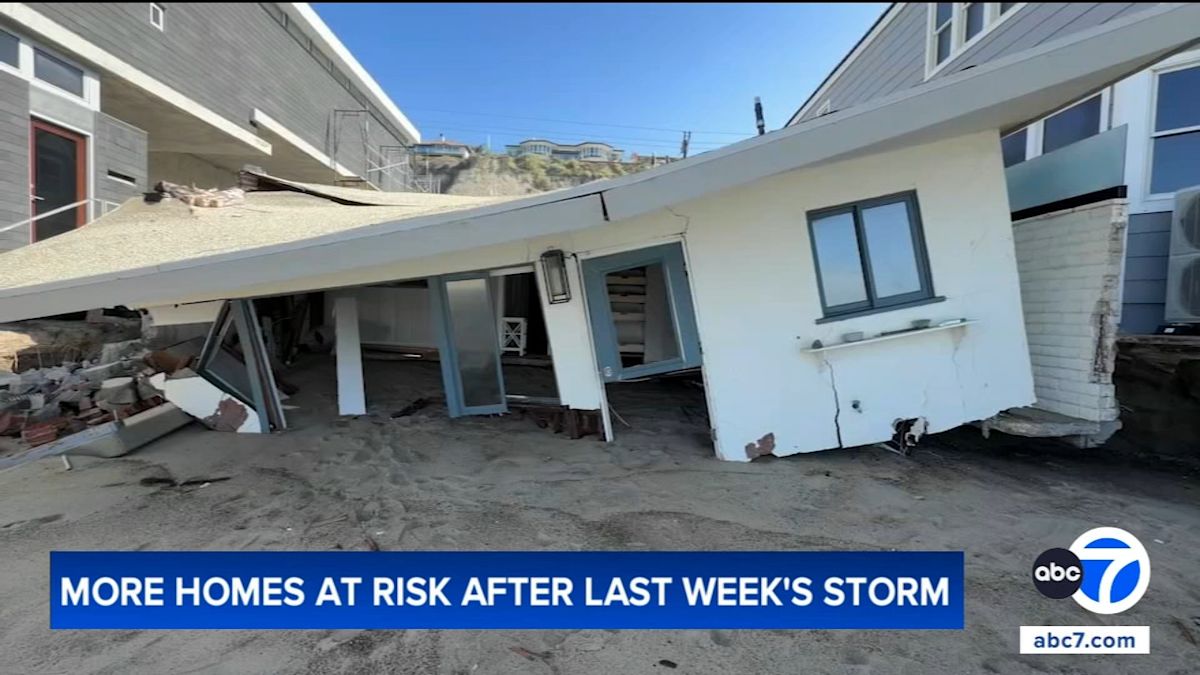
A severe coastal crisis continues to unfold along the Southern California coastline as violent surf and persistent shoreline erosion have left oceanfront properties in Capistrano Beach severely damaged. In the wake of intense ocean swells generated by Hurricane Marie, another residential structure has begun sinking directly into the sea, forcing safety inspectors to condemn multiple buildings and leaving beachfront homeowners grappling with catastrophic property losses.
The city of Dana Point has officially declared a local emergency in response to the escalating destruction along the coast. Municipal officials reported that a total of 10 beachfront properties along Beach Road have now been red-tagged, a designation indicating that the structures are completely unsafe for human occupancy. In addition to the condemned structures, inspectors have placed yellow tags on seven other properties, restricting access due to ongoing structural hazards.
The recent destruction has laid bare the extreme vulnerability of shoreline residences in the area. While the direct swells from Hurricane Marie have subsided, the physical toll on the coastline has not abated, with sand reserves rapidly receding and foundations left exposed to the relentless pounding of high tides. Local authorities and emergency personnel have noted that the structural stability of the entire strip remains precarious as waves continue to undermine oceanfront foundations.
Among the severely affected residents are Amy and Chris Rogers, whose Beach Road residence suffered catastrophic structural failure during the recent high-surf conditions. The violent sea entirely ripped away the home’s back deck, leaving their kitchen suspended over the surf and directly exposed to the crashing ocean waves below.
The couple recounted the harrowing progression of the storm’s aftermath, describing profound frustration over what they characterize as a total lack of coordinated government response. According to the Rogers, the impacted neighborhood has received no tangible disaster aid, physical labor, or financial support from municipal, county, state, or federal entities during the critical week following the storm's onset, even as additional homes continue to collapse into the sea.
The emotional toll on displaced homeowners has been severe as the reality of the destruction sets in. The Rogers explained that they navigated the entire spectrum of grief in a matter of days, shifting from intense sorrow and tears to mounting outrage. They firmly maintain that the devastation impacting their community was largely preventable had regulatory policies permitted proactive shoreline management.
Homeowners in the area argue that rigid coastal oversight and regulatory constraints have historically hindered their ability to implement timely and effective protective barriers along their private properties. Coupled with a critical deficiency in regional beach nourishment projects to replenish vanishing sand, the lack of protective measures left the oceanfront homes directly exposed to the recent surge in wave energy.
In an effort to provide immediate relief, the California Coastal Commission confirmed through a spokesperson that it has processed and authorized emergency permit applications across 17 beachfront properties. These emergency permits grant homeowners temporary permission to place heavy boulders and hard armoring along the seaward edge of their parcels to deflect incoming waves.
Despite these approvals, local homeowners have sharply criticized the regulatory framework governing the emergency permits. The Rogers noted that obtaining the temporary permit requires mailing a $1,600 administrative fee for authorization that lasts only 120 days. Under the strict terms of the commission's temporary approval, property owners are required to completely dismantle the protective armoring and remove all materials once the four-month window expires.
The debate over shoreline fortification highlights a longstanding tension in coastal resource management. The California Coastal Commission maintains that the placement of hard armoring and rock boulders can accelerate coastal erosion elsewhere along the shoreline while degrading public beach access. The affected residents concur with the assessment that boulders are not an ideal solution, yet they stress that the state's reluctance to support sand replenishment has left them with no viable alternative.
Rather than relying on short-term stone barricades that must eventually be removed, local residents are actively demanding comprehensive, long-term beach nourishment initiatives. Property owners contend that systematically restoring sand to Capistrano Beach is the only sustainable strategy to safeguard private dwellings while simultaneously preserving public coastal land for future generations.
As local discontent mounts, legislative leaders are attempting to escalate the situation to the highest levels of state government. A spokesperson for Assemblywoman Laurie Davies confirmed that the lawmaker is actively pressing Governor Gavin Newsom to declare a formal State of Emergency for the entire coastal zone, a move that could unlock crucial state resources and expedite relief efforts for the beleaguered enclave.
For families whose residences have been condemned, the immediate future remains clouded by legal and financial uncertainty. The Rogers and their neighbors are currently waiting for insurance adjusters to determine whether their damaged oceanfront properties can be structurally salvaged and rebuilt, or if the remaining compromised portions will have to be entirely demolished and cleared away.







(0)