
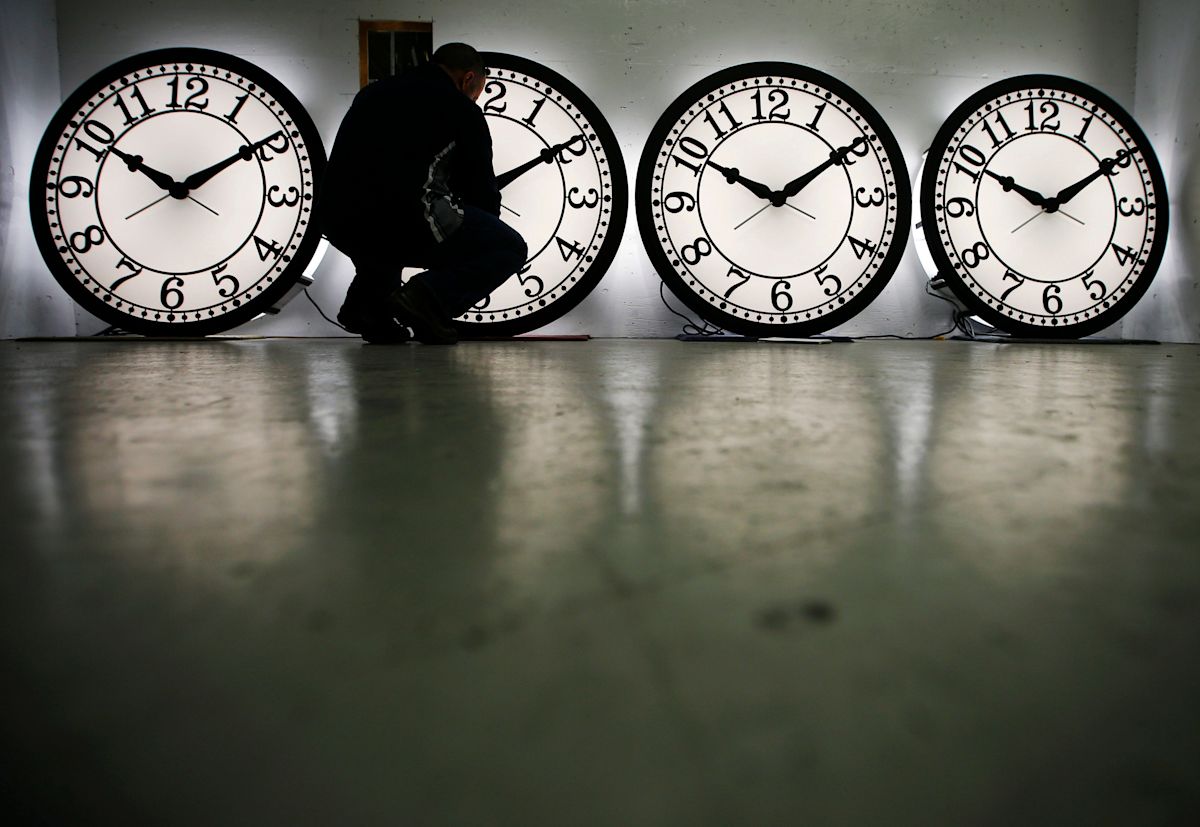
As autumn progresses, millions of Americans are preparing for the familiar seasonal ritual of adjusting their clocks, signaling the conclusion of daylight saving time. The upcoming transition will officially bring an end to months of extended evening sunlight, allowing residents across most of the nation to gain an extra hour of rest as standard time resumes for the winter months.
The scheduled shift is set to take place in the early morning hours of November 1, when clocks will officially turn backward by one hour, moving from 2:00 a.m. to 1:00 a.m. Modern electronic devices connected to internet networks, including smartphones, computers, and tablets, are programmed to update their internal clocks automatically. However, individuals will still need to manually reset traditional wall clocks, household appliances, and displays inside their vehicles.
The semiannual adjustment highlights the contrast between the seasonal time shifts observed throughout the United States. While the autumn "fall back" grants individuals an additional hour of sleep, the springtime "spring forward" requires people to forfeit an hour of sleep in exchange for later sunrises and prolonged daylight in the evening throughout the spring and summer months. These regulations continue to apply across various regions, including states like Mississippi in the Central time zone.
Even as citizens prepare for the impending change, the biannual tradition remains the center of an escalating national debate over whether the country should abandon clock shifting altogether. Lawmakers and political leaders have increasingly questioned the practicality of alternating between standard time and daylight saving time, prompting several legislative proposals aimed at reforming how the nation measures time.
President Donald Trump has been a prominent and vocal critic of the practice, repeatedly advocating for an outright end to the twice-yearly time changes. Through public statements, the president has insisted that the United States should permanently stabilize its timekeeping rather than subjecting citizens to recurring schedule disruptions every spring and autumn.
Trump articulated his frustration with the routine in an August 4 post on Truth Social, describing the process of changing clocks twice a year as "foolish, inconvenient and, in some cases, very costly." In his post, he asserted that everyday citizens have grown tired of adjusting their lives to accommodate the shifts, urging immediate government action to bring stability to the calendar.
In making his case for permanent daylight saving time, Trump argued that locking the clock into the summer schedule would yield substantial societal advantages. He asserted that a permanent system would reduce traffic collisions, deter criminal activity, cut energy expenditures, and provide working families with significantly more usable daylight during the evening hours.
To accomplish this goal, Trump called for rapid legislative action, urging lawmakers with the message, "LET'S PASS THE SUNSHINE PROTECTION ACT, ASAP." He expressed that the country should leave the clock in its daylight saving configuration indefinitely and never alter it again, aligning his policy position with ongoing federal reform efforts.
Under the proposed Sunshine Protection Act, the United States would formally adopt daylight saving time on a permanent basis nationwide. The legislation represents a comprehensive attempt to end standard time switches, although other congressional proposals have suggested alternative frameworks, such as granting individual states the authority to decide their own observance.
Despite legislative momentum, the pathway to enacting permanent daylight saving time remains incomplete on Capitol Hill. While the House of Representatives has already voted to approve the Sunshine Protection Act, the measure has stalled in the upper chamber. The Senate returned from a five-week legislative recess on September 14 with no vote scheduled on the bill, despite direct calls from Trump for senators to take swift action.
Any modification to the nation's timekeeping framework ultimately rests under federal jurisdiction, as substantive changes to daylight saving time rules require formal authorization from Congress. As long as federal legislation remains unpassed and unsigned into law, current statutes mandate that the public must continue observing the scheduled November clock rollback.
Clarifying the mechanics of the policy, analysts emphasize that adopting daylight saving time year-round does not actually increase the total volume of daylight in a day. Instead, the permanent shift merely redistributes sunlight, moving it an hour later into the evening compared to standard time schedules.
Proponents of maintaining daylight saving time point to long-standing arguments that extended evening light reduces overall energy costs and maximizes daytime utility for the public. However, many sleep and medical specialists challenge this perspective, cautioning that tampering with standard time schedules can generate negative physiological outcomes.
Health researchers emphasize that semiannual clock adjustments impose substantial stress on the human body by interrupting circadian rhythms, the internal biological systems responsible for regulating sleep cycles and essential bodily functions. These biological disruptions can lead to notable health and safety hazards across the population.
Dr. Erik Herzog, a professor of biology and neuroscience at Washington University in St. Louis and former president of the Society for Research on Biological Rhythms, has argued that establishing permanent standard time—rather than permanent daylight saving time—would represent the healthiest choice for the human body. Herzog noted that losing an hour during the springtime shift is particularly hazardous, pointing to documented correlations between the spring change, elevated rates of heart attacks, and increased motor vehicle accidents.
The United States has experimented with continuous daylight time in the past, having previously enacted a year-round daylight saving measure back in 1974. Until Congress makes a definitive decision on whether to revisit that historical approach or adopt a new standard, Americans must once again prepare to turn their clocks backward when the official change arrives on November 1.






(0)