
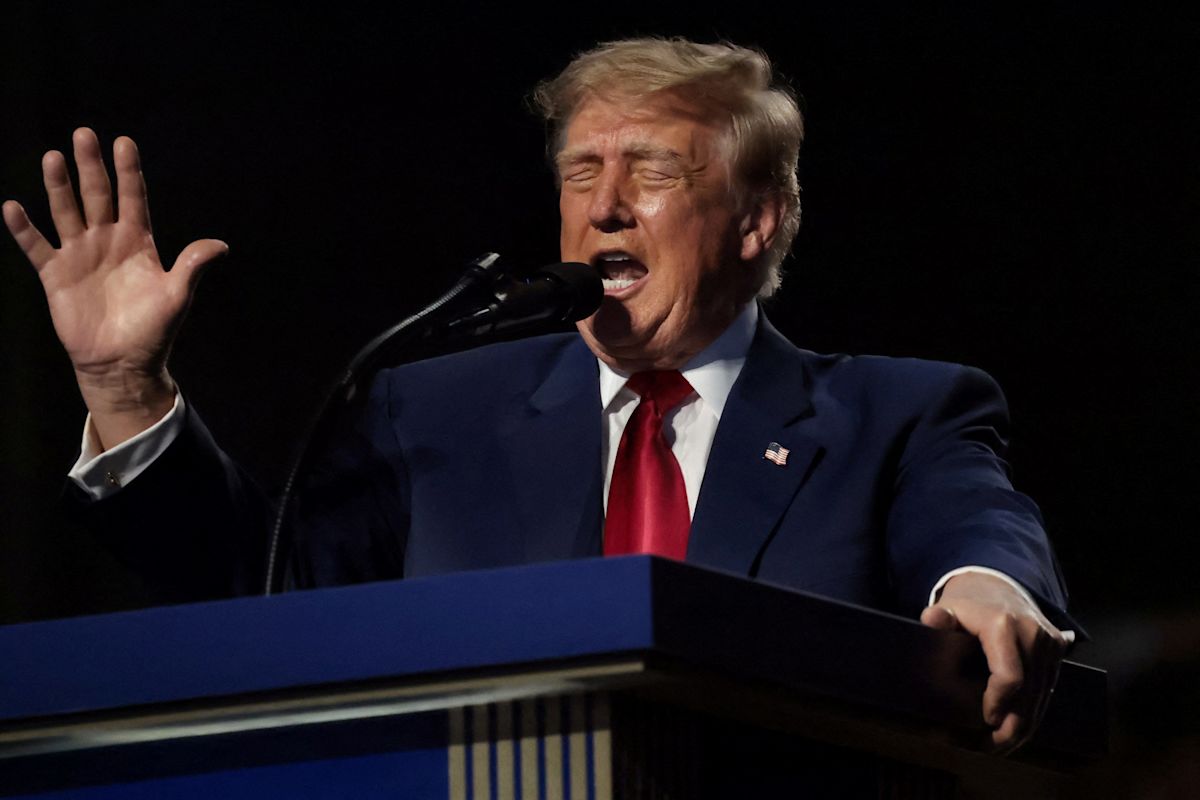
President Donald Trump has presented voters with a high-stakes financial incentive ahead of the upcoming midterm elections, pledging to issue a $5,000 dividend payment to every American adult. However, the proposal comes with a significant political contingency: the Republican Party must secure majorities in both the House of Representatives and the Senate on Nov. 3.
The ambitious proposal was unveiled during a campaign rally in Dallas on Sept. 9 and reinforced through an official White House press release published the following day. Administration officials characterized the proposed disbursements as a direct reward for the public, asserting that the nation’s economic expansion under Trump’s leadership has unlocked unprecedented prosperity for everyday citizens.
To justify how the federal government would finance such widespread payouts, the White House maintained that the necessary funding would stem from broader economic strength. Specifically, the administration highlighted that the president has generated trillions of dollars in new private investments while implementing an aggressive, unprecedented crackdown on government waste across federal agencies.
Despite the administration's optimistic rhetoric, budgetary analysts and policy experts on both sides of the political spectrum have raised serious concerns regarding the feasibility and financial impact of the plan. Nonpartisan evaluations indicate that issuing checks of this scale to all adult citizens would require an astronomical amount of capital, placing an extraordinary burden on public finances.
According to findings from the Committee for a Responsible Federal Budget, delivering the promised $5,000 dividends to every adult would carry an estimated price tag of $1.2 trillion. Economists warn that injecting such a massive sum into the economy could substantially increase the national debt while also heightening the risk of further inflation.
The sheer magnitude of the proposed payout easily overshadows prior federal stimulus initiatives. Analysis shows that the $1.2 trillion cost would exceed the combined total of all three direct relief checks distributed to citizens throughout the COVID-19 pandemic, underscoring the unprecedented scale of the administration's latest proposal.
Furthermore, the projected expenditure surpasses the anticipated cost for the upcoming year of the administration’s signature legislative package, the One Big Beautiful Bill Act. The cost of the dividend checks would also represent a sum roughly 50% higher than the entire primary budget deficit projected for the federal government in 2027.
Beyond its budgetary impact, the path to enacting the dividend proposal faces formidable procedural and legal obstacles. Distributing the funds would necessitate explicit congressional authorization, a process that could take months to navigate. Additionally, any resulting measure could encounter legal challenges and potential review by the Supreme Court before checks could be issued.
Skepticism surrounding the proposal is further compounded by a history of unfulfilled financial pledges made by the president without following standard procedures. In early 2025, Trump floated a similar $5,000 stimulus payment, claiming the funds would originate from government savings achieved by the Elon Musk-led Department of Government Efficiency.
Those early direct payments never came to fruition for American households. The Department of Government Efficiency, known as DOGE, faced operational difficulties and was ultimately shut down earlier this year, leaving the proposed savings uncollected and the associated stimulus checks discarded before reaching the public.
Later in November 2025, Trump proposed a separate $2,000 relief check designed to alleviate the financial burdens caused by steep tariffs imposed on every U.S. trading partner. That initiative likewise stalled after the Supreme Court ruled the tariffs unconstitutional, effectively eliminating the revenue stream that was intended to fund the stimulus distribution.
Even so, observers note that the president has managed to successfully execute other targeted financial programs in the past. In December 2025, all active military personnel received $1,776 payments dubbed "Warrior Dividend" bonuses, demonstrating that direct federal disbursements can be delivered under specific legislative circumstances.
Yet, the funding mechanism for those military bonuses revealed notable differences between administration rhetoric and reality. Although Trump had publicly claimed the Warrior Dividends would be funded directly through incoming tariff revenue, the money was ultimately drawn from military housing funds appropriated by Congress in the One Big Beautiful Bill law.
The administration has also overseen the rollout of the "Trump Accounts" initiative, which deposits $1,000 into investment starter accounts for children born between 2025 and 2028. According to statements from Trump, roughly 6 million children had already been enrolled in the savings program as of July 6.
Notwithstanding those previous financial programs, the newly proposed $5,000 adult dividend represents an undertaking of vastly larger proportions. With widespread skepticism among lawmakers and economists, alongside steep fiscal requirements and procedural hurdles, fulfilling the promise following the November midterms remains an exceptionally difficult prospect.







(0)