
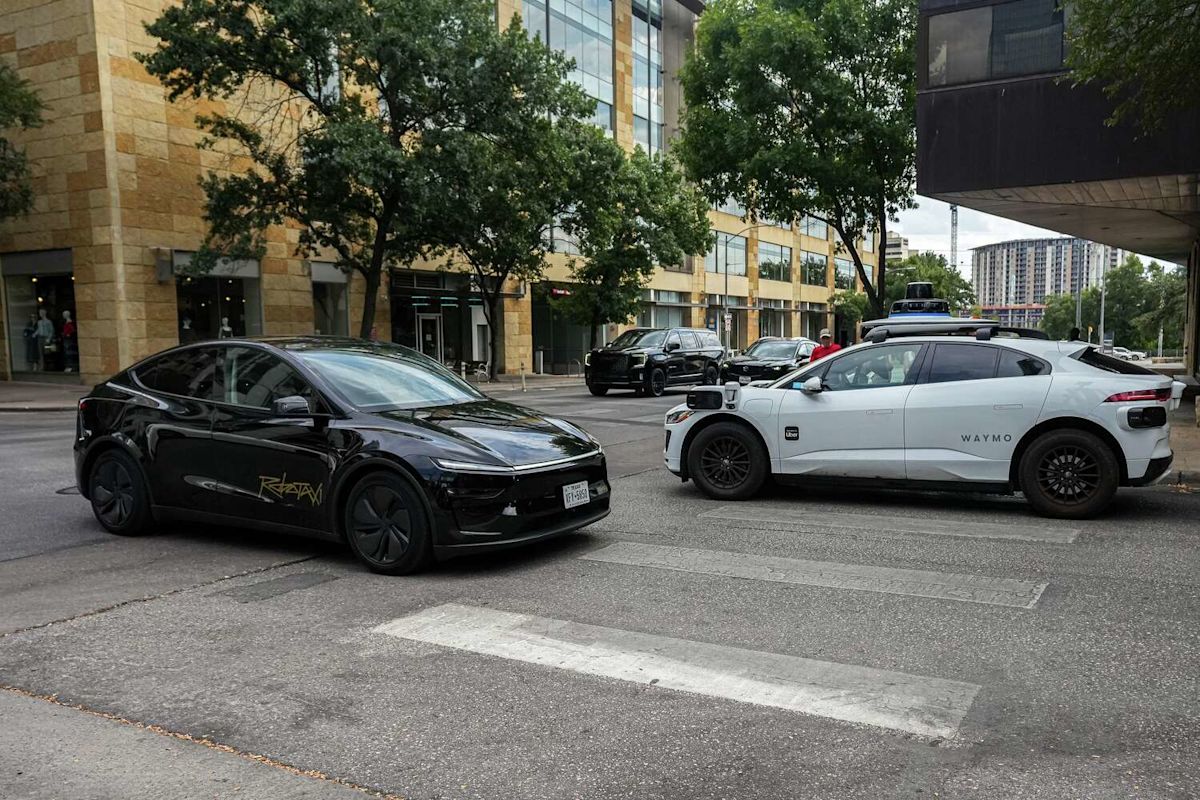
Federal safety regulators documented 22 collisions involving autonomous robotaxis across the state of Texas during a recent four-week reporting period that concluded on August 17. The newly released figures from the National Highway Traffic Safety Administration provide a detailed snapshot of how autonomous driving systems are performing in real-world traffic conditions at a moment when technology developers and automakers are aggressively expanding their commercial footprints and driverless fleets across major metropolitan centers.
Austin served as the focal point for more than a third of those statewide collisions, logging eight separate incidents over the four-week window. The local crash reports highlight the operational hurdles and intricate driving scenarios that autonomous vehicles encounter in dense urban centers, ranging from minor property damage and unexpected maneuvering to a collision with an electric bicycle that required formal investigation by local emergency personnel.
The emergence of these latest collision reports coincides directly with a significant influx of new autonomous vehicles entering the Texas market. Tesla Inc. has been actively registering more vehicles across the state as it prepares for the official rollout of its dedicated Cybercab model, elevating its total registered autonomous fleet in Texas to 439 vehicles as part of its ongoing autonomous mobility ambitions.
At the same time, Waymo, the autonomous driving technology subsidiary operated by Google parent company Alphabet Inc., has substantially grown its own presence in Texas. The company has expanded its statewide operational fleet to nearly 1,000 driverless robotaxis, solidifying its position as one of the largest and most widely deployed autonomous ride-hailing services operating within the state.
Among the eight incidents logged in Austin, the Austin Police Department was called to investigate an accident involving an electric bicycle rider and a robotaxi operated by autonomous mobility firm Avride. According to the regulatory disclosure submitted by Avride to federal safety officials, the cyclist was traveling in the wrong direction along a two-way street when they lost control of the bicycle, slid across the roadway, and collided with the side of the autonomous vehicle, sustaining minor injuries in the process.
The incident added to the expanding crash records for Avride, which operates a localized fleet of 344 Hyundai Ioniq 5 electric autonomous vehicles in the Austin region. With this latest report, Avride has accumulated a cumulative total of 27 crash reports in the city under federal mandatory reporting requirements established for autonomous driving systems.
Tesla also contributed to Austin’s collision statistics during the reporting period after one of its autonomous vehicles drove into a metal bollard connected to a chain fence. That single-vehicle collision caused property damage and increased Tesla’s cumulative crash count in the city of Austin to 23 incidents since comprehensive regulatory tracking began in June 2025.
In contrast to other active operators, Zoox, the autonomous mobility subsidiary owned by Amazon Inc., maintained a clean record throughout the four-week reporting window. The company logged zero new collisions across its Austin deployment of 44 purpose-built autonomous vehicles, keeping its total historical collision count in the city at three incidents.
Waymo accounted for the largest share of Austin’s latest crash filings, submitting reports for five separate traffic incidents across the city. These newly documented events lifted Waymo’s total cumulative collision count in Austin to 135 incidents since June 2025, reflecting the extensive operational scale and daily passenger trips conducted by its local autonomous fleet.
Federal filings submitted by Waymo revealed a varied collection of driving circumstances behind its Austin collisions. Multiple events occurred when human-operated third-party vehicles improperly drifted or merged into the travel lane occupied by the autonomous car, while another incident involved a commercial garbage truck that reversed directly into a Waymo vehicle. Additionally, one single-vehicle event saw a Waymo car suffer underbody damage after navigating over an unusually sloped parking lot exit ramp.
Beyond the Austin municipal limits, Texas logged an additional 14 autonomous vehicle collisions across other major metropolitan regions during the same four-week timeframe. The Dallas and Arlington areas recorded a combined total of 10 collisions, while Houston documented four incidents. San Antonio, by contrast, recorded zero crashes during the period, as Waymo’s local ride-hailing operations have remained suspended following an April event in which one of its driverless cars was swept away by dangerous floodwaters.
The federal dataset also cataloged collision reports from several other autonomous vehicle companies operating across Texas roadways. Among them were delivery robotics developer Nuro and autonomous mobility firm May Mobility, the latter of which has established a partnership with ride-hailing network Lyft to provide autonomous transit services in commercial markets.
The most severe collision documented in the statewide data occurred in Dallas, resulting in a pedestrian fatality that remains the subject of an active investigation by municipal law enforcement. According to the mandatory incident report submitted by Waymo to federal regulators, the autonomous vehicle had begun slowing down after detecting a pedestrian walking in the roadway when a trailing, human-driven sport utility vehicle struck the pedestrian from behind.
The force of the impact from the human-driven SUV propelled the pedestrian, identified by authorities as 71-year-old Juan Guzman, into the rear left side of the decelerating Waymo vehicle. Guzman was transported by emergency responders to an area hospital, where he later died from his injuries. The driver of the SUV remained at the scene following the collision, and Dallas police have not filed any criminal charges or announced arrests as their inquiry into the fatal crash continues.
The Dallas incident stands as the first and only fatality involving an autonomous vehicle recorded in the state of Texas within the federal crash database since June 2025. On a national level, federal regulators have documented only one other autonomous vehicle-related fatal collision during that same tracking timeframe, which also involved a Waymo robotaxi operating in another state.
That prior national fatality occurred in September in Tempe, Arizona, where a motorcycle crashed into the rear of a slowing Waymo vehicle. The initial collision caused the motorcycle rider to be thrown directly onto the roadway, where they were subsequently struck and killed by a passing human-driven vehicle, illustrating the persistent safety complexities and risks that emerge when autonomous driving systems share the road with human motorists, cyclists, and pedestrians.


(0)