
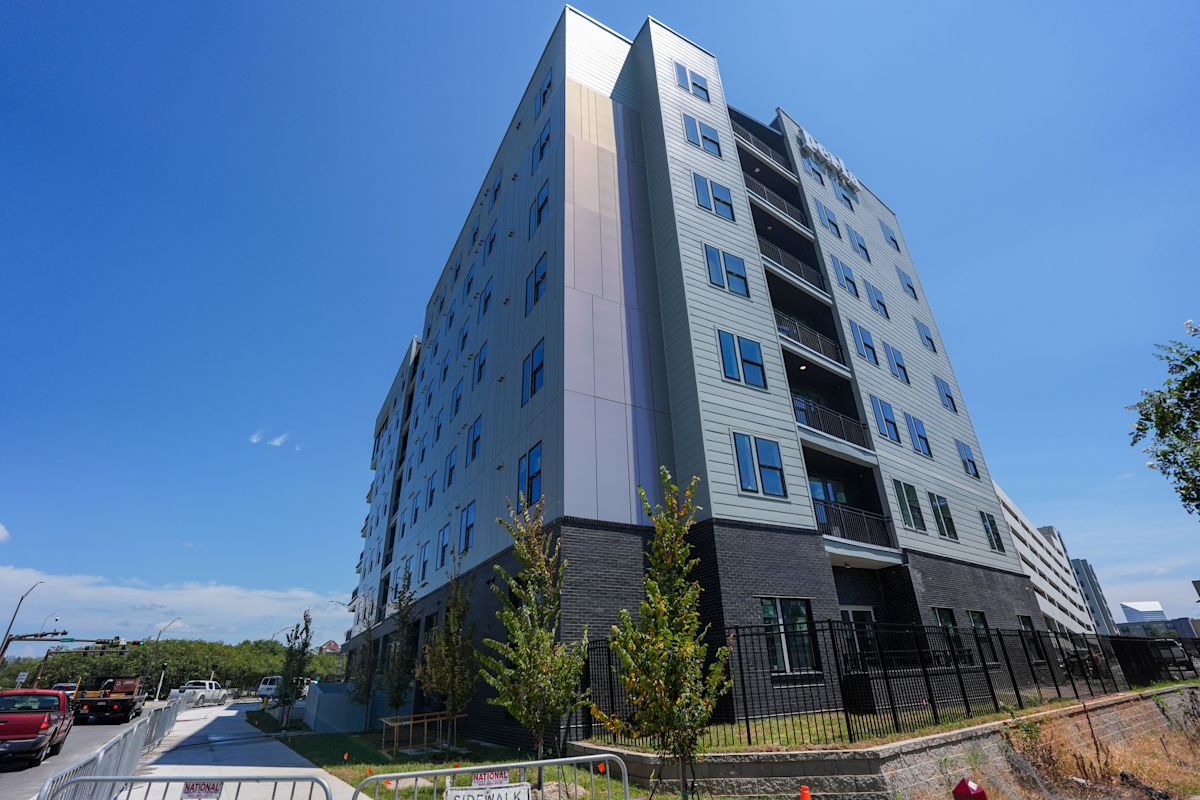
Hundreds of university students in Tallahassee have found their academic semester disrupted following substantial move-in delays at Perla Apartments, a newly constructed residential complex situated directly across from Doak S. Campbell Stadium. The property originally scheduled its grand move-in date for Friday, August 21, but unexpected postponements left prospective residents scrambling for emergency accommodations just as the school year was getting underway.
The displacement has heavily impacted scholars enrolled at neighboring institutions, primarily Florida State University and Florida A&M University. With classes starting and housing unavailable, incoming residents were forced into temporary living arrangements across the city, creating widespread logistical challenges for both the students and their families.
In the weeks following the initial postponement notice, the management team at Perla distributed multiple email communications attempting to outline revised schedules. On September 2, an update informed residents that a new anticipated move-in timeline had been established, setting a deadline of no later than September 12, 2026, for occupancy.
Subsequent messaging further divided the timeline across the property's different sections. An email delivered on September 9 stated that the Certificate of Occupancy for Buildings B and C would be formally submitted the following day, while residents assigned to Building A were informed that their move-in window would occur no later than September 19.
Despite these updates, students and parents voiced profound dissatisfaction regarding the transparency and timing of the communication. Axel Bertran de Balanda, whose daughter was slated to move into the facility, noted that navigating the prolonged uncertainty was the most taxing element of the ordeal, emphasizing that families were repeatedly left without clear, reliable answers from staff.
The frustration spilled over onto social media platforms, where families shared their grievances regarding short-notice disruptions. Reacting to the situation on public posts, parents pointed to management issues and lamented receiving less than 24 hours of advance notice regarding the August delay, which forced several families to urgently seek leases at alternative complexes.
For some residents, personal resources and fortunate circumstances helped mitigate the disruption. FSU international affairs major William Ales considered himself among the luckier individuals affected by the setback, having secured an individual room without a roommate while relying on accommodating friends and family members who transported his belongings.
Even so, Ales expressed lingering disappointment with how property administrators handled the situation. He explained that while the management group remained apologetic in their correspondence, their updates arrived consistently late, leaving a bitter taste regarding their overall operational transparency.
Other students endured far more turbulent relocations, frequently changing temporary quarters throughout the three-week displacement period. FSU freshman Amélie Bertran de Balanda experienced severe instability, being shuttled from an initial Airbnb to a second short-term rental property before ultimately being placed in a local hotel.
These lodging arrangements grew increasingly complicated during Florida State Seminoles home football game weekends. Because regional hotel inventory quickly reached peak capacity for athletic events, several displaced students were relocated to lodging facilities situated considerably farther away from the university campus.
The geographic distance and lack of personal vehicles compounded everyday difficulties for new students trying to establish academic routines. Amélie Bertran de Balanda highlighted the strain of traveling to off-site storage units without a car, explaining that the transient living situation made it exceedingly challenging to develop a consistent day-to-day schedule.
Adding to the parental frustration were conflicting assurances provided by leasing agents prior to the start of the semester. Axel Bertran de Balanda recounted visiting the Perla leasing office in early July to confirm the August 21 move-in date, noting that representatives explicitly assured him the schedule was intact and claimed a Certificate of Occupancy had already been secured.
When the delayed move-in process finally commenced for eligible units, the on-site execution received praise from families who had endured weeks of waiting. The elder Bertran de Balanda acknowledged that the actual transition into the building was seamless, crediting on-site moving personnel for providing substantial physical assistance during the arrival day.
To offset the financial and emotional burden placed on tenants who remained displaced, the property development team pledged a series of ongoing relief measures. Management promised continued compensation packages featuring daily rental credits, vouchers for meals, coordinated transit assistance, and full reimbursements for storage costs until all residents are fully settled.





(0)