
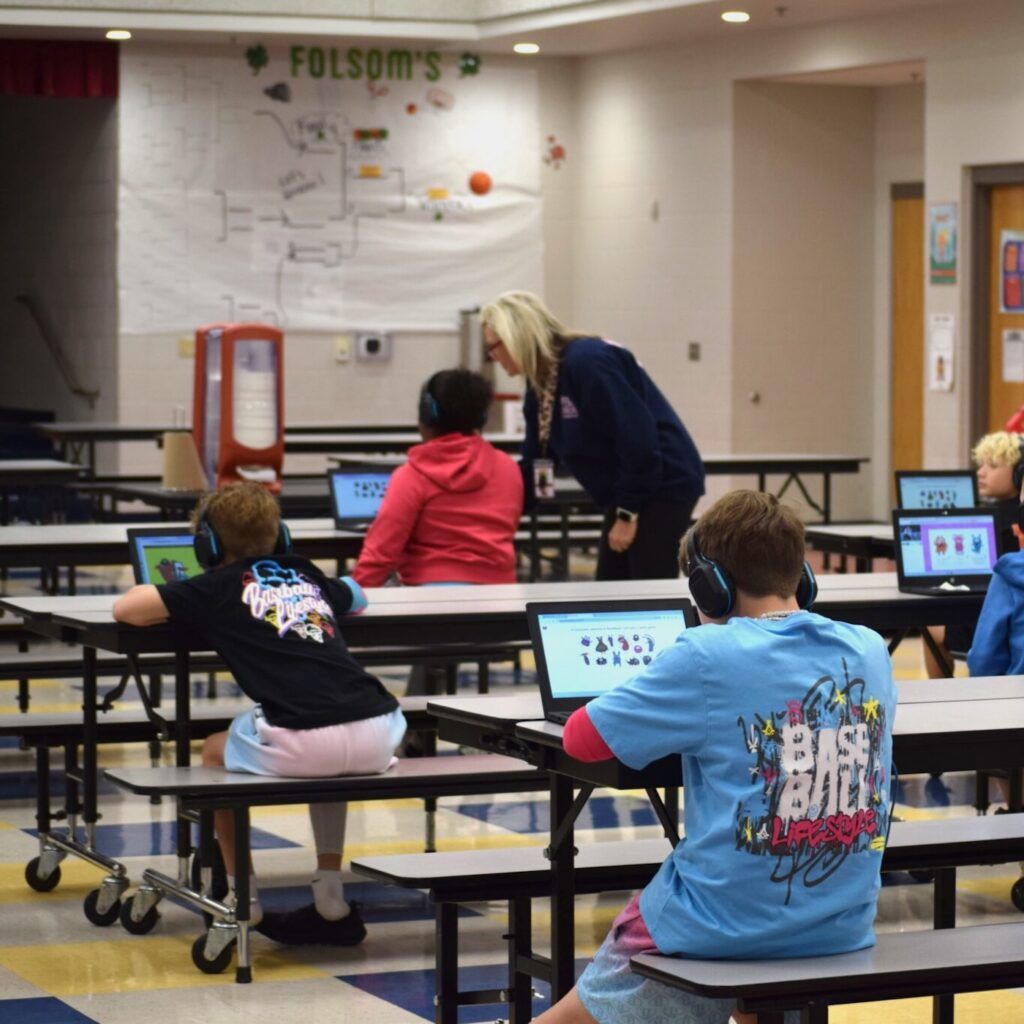
Ohio public schools have reached a pivotal turning point in their handling of emerging classroom technologies following a recent state mandate requiring all districts to formally establish artificial intelligence guidelines. With traditional public districts, charter community schools, and specialized STEM academies having met a July 1, 2026, policy adoption deadline, educators and administrators are now shifting their attention toward how these rules will function in day-to-day academic settings.
The statewide directive established clear categories for local school boards to address. Under guidance provided by the state's educational leadership, districts were instructed to construct frameworks covering student and staff usage, digital privacy safeguards, ethical considerations, third-party software integration, teacher instructional strategies, and the broader influence of automated tools on curriculum goals and student evaluations.
While these state-recommended categories establish a structural baseline, education policy observers note that formal compliance does not automatically solve the operational difficulties facing teachers. A district can adopt a comprehensive policy document while still leaving classroom instructors without a practical method to determine whether generative tools are genuinely advancing student comprehension or merely functioning as an automated shortcut to complete assignments.
To bridge this operational gap, policy experts are advocating for the introduction of a proof-of-learning requirement during the next stage of local implementation. This framework would require students to submit structured reflections when artificial intelligence systems play a substantive role in their graded coursework, shifting the evaluation focus from mere output to cognitive engagement.
Under this proposed accountability measure, whenever an automated system materially influences an assignment, the student would provide a concise four-part disclosure. This documentation requires students to explain the specific prompts or instructions they gave the software, detail which elements of the generated response they modified or rejected, identify the facts or claims they independently checked, and articulate what skills or knowledge they can now demonstrate without technological assistance.
Advocates emphasize that such a requirement must remain strictly bounded in scope so as not to overwhelm everyday classroom tasks. Routine digital functions—including basic spellchecking, automated sentence completion, and standard document formatting—would be entirely exempt. Instead, mandatory reporting would apply solely when automated systems significantly shape core intellectual components, such as analytical reasoning, research synthesis, essay drafting, computer coding, graphic design, or final academic conclusions.
The necessity for qualitative insight into student work stems from the unique nature of modern generative software. Advanced language models can rapidly generate fluent, highly articulate text that projects a misleading sense of mastery. Consequently, a student might produce an impressive paper while failing to recognize flawed logic, fabricated citations, or superficial analysis embedded within the machine-generated text.
Education specialists caution that relying primarily on technical detection software creates severe pedagogical drawbacks. Attempting to catch unauthorized usage often turns the classroom into an adversarial environment centered on concealment and surveillance rather than education. Instead of focusing on policing software usage, educators argue the central question should remain focused on identifying the specific intellectual work performed by the learner.
The four-part standard is designed to reveal a student's active judgment through concrete academic choices across various disciplines. In a history course, for example, a student might note that an automated platform suggested multiple explanations for a historical event, but explain why one cause was discarded after examining assigned primary source materials.
Similarly, in technical subjects such as computer science, a student could document how a generated code snippet failed to account for a specific edge case and describe the manual debugging required to fix the error. In career and technical education programs, students could illustrate how machine-generated procedural instructions were altered to comply with established safety codes and equipment manuals.
The education sector's structured approach stands in contrast to the broader state landscape regarding technology governance. Reporting earlier this year highlighted that wider efforts by Ohio lawmakers to regulate commercial artificial intelligence had stalled because of uncertainties regarding state-level enforcement capabilities.
In the realm of public education, however, clear governance mechanisms are already in place. The state legislature successfully mandated local action, the Department of Education and Workforce provided a foundational model, and local school boards now hold the regulatory authority to enact detailed classroom procedures. This makes schools an ideal testing ground for practical accountability standards while broader legal questions remain unresolved.
Beyond immediate classroom needs, proponents argue that learning to document and audit technological outputs directly prepares students for the demands of the modern workforce. Employers increasingly seek professionals who can do more than generate basic prompts; they require workers who can critically supervise automated systems, identify inaccuracies, protect proprietary information, and take personal responsibility for final deliverables.


(0)