
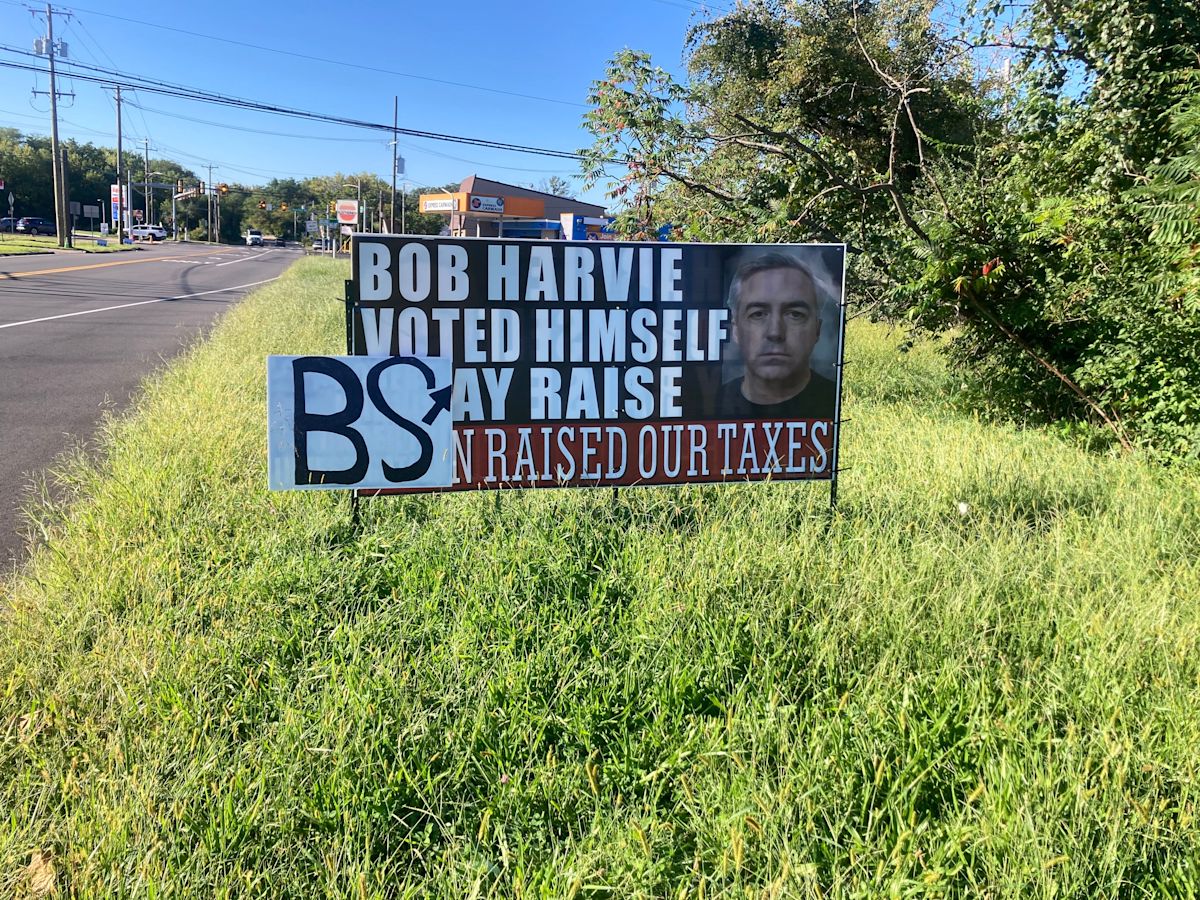
Local leaders in Middletown Township have taken formal steps to overhaul the community's public signage policies, introducing a refreshed regulatory framework that carries potential fines reaching $500 per day for non-compliant displays. Township supervisors voted unanimously to advertise the proposed ordinance, setting in motion substantial changes to how temporary signs of all kinds are managed across the municipality.
The municipal update is designed to bring local policies into full compliance with federal constitutional law, but its practical effects will be felt across a wide array of everyday displays. While political campaign signs are expected to experience the most noticeable impact, the revamped guidelines establish strict, uniform standards that apply regardless of a sign's underlying message or purpose.
Under the comprehensive policy, virtually every variety of temporary lawn and roadside sign will fall under township oversight. Commercial promotions—ranging from neighborhood power-washing operations and seasonal businesses offering Christmas light installations to youth baseball sign-up announcements—will all face the same level of municipal scrutiny as traditional political advertisements.
The township's decision to revise its local code stems directly from a May 2024 decision issued by the U.S. Third District Court. That federal judicial ruling established a binding mandate requiring all municipal governments across Pennsylvania to apply identical, content-neutral rules to all temporary public signs, eliminating historical carve-outs and preferential treatment.
The legal precedent arose from a challenge against Camp Hill Borough, where previous municipal rules favored commercial notices and real estate "for sale" markers over signs conveying personal or political viewpoints. In that case, local officials had placed a rigid limit of just two personal expression signs per residential parcel, a restriction the federal court determined was an unconstitutional infringement upon First Amendment protections.
Judges in the Camp Hill matter criticized the municipality for establishing what was described as a "crazy quilt" of inconsistent standards. Under that unlawful structure, residents expressing political viewpoints faced municipal restrictions, whereas commercial advertisements and holiday greetings were permitted to stand without similar government interference.
To avoid similar legal vulnerabilities, Middletown's proposed ordinance eliminates content-based distinctions and institutes a blanket prohibition against placing any temporary signage within municipal rights-of-way. These restricted zones, which typically run along busy highway corridors and major traffic arteries, must remain entirely clear of unauthorized displays no matter what message they convey.
The measure also sets strict scheduling parameters for political speech on permitted property. Campaign displays will not be allowed to appear earlier than 30 days prior to an election, and property owners will be required to take down all such materials within 10 days following the conclusion of the vote.
State-controlled corridors running through the community are also addressed under existing jurisdictional standards. While bans on placing signs within Pennsylvania Department of Transportation rights-of-way—including heavily traveled routes such as Bristol-Oxford Valley Road in Levittown—have technically existed for years, local authorities acknowledge that enforcement along state corridors has historically been rare.
Managing enforcement across a sprawling suburban landscape presents operational challenges for local officials. Township solicitor Jim Esposito noted that Middletown, which ranks among the largest municipalities in Bucks County with a population of approximately 50,000 residents, lacks the logistical capability to deploy dedicated inspection crews to constantly patrol every right-of-way.
Instead, the township intends to handle road clearance through existing daily operations alongside a complaint-driven enforcement strategy. Municipal road maintenance workers will be instructed to remove unlawful displays whenever they encounter them during their regular assignments, and township staff will follow up when formal complaints are submitted by community members.
When cases escalate to formal legal proceedings, violators face substantial financial consequences. The proposed ordinance empowers district justices to assess penalties of up to $500 per day for each ongoing violation, creating a strong legal deterrent against persistent non-compliance.
Despite the high ceiling for financial penalties, municipal administrators plan to prioritize education and voluntary compliance over immediate punishment. Esposito explained that the township intends to extend leniency to first-time offenders, reserving severe daily fines for individuals and entities that continue to disregard official warnings.
The solicitor indicated that formal monetary penalties are most likely to be pursued when individuals refuse to cooperate after being formally notified of a violation. In those instances, cases presented before a district justice will reflect that the offender was given prior notice yet declined to remove the improper signage.
For displays situated on private property—such as residential real estate "for sale" boards or personal lawn statements—the township intends to maintain a more measured approach, particularly when neighbors have lodged no complaints. However, property owners will still be obligated to adhere strictly to mandatory physical size limitations.
According to Esposito, no individual sign erected on private property may exceed 12 square feet in total surface area. Furthermore, the combined area of all signs displayed on a single property cannot exceed 24 square feet, ensuring that even permissible yard displays remain within established community aesthetic standards.







(0)