
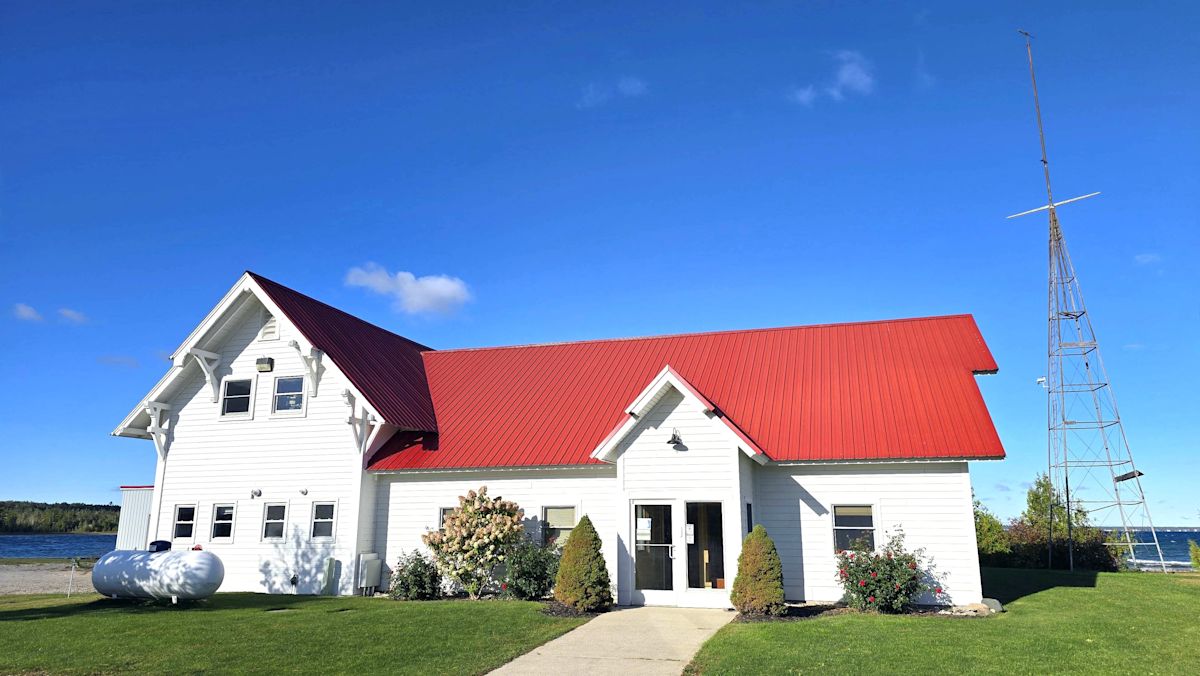
The Hammond Bay Biological Station, a historic research and maritime outpost located along the northeastern shoreline of Lake Huron, is preparing to celebrate its sesquicentennial anniversary on Sept. 30. The upcoming milestone marks 150 years of continuous service, reflecting an operational legacy that encompasses nineteenth-century maritime rescue operations, federal Coast Guard service, and decades of pioneering Great Lakes fisheries research.
To commemorate the landmark anniversary, organizers have scheduled a multi-part community observance that invites the public to explore the facility's rich history and scientific achievements. The daytime portion of the celebration will feature public guided tours at the biological station's grounds, situated at 11188 Ray Road in Millersburg, offering visitors an opportunity to view the facility's operations firsthand.
The public tours on Sept. 30 are scheduled across three separate afternoon time slots at 1 p.m., 2 p.m., and 3 p.m. Because space inside the working research facility is limited, advance registration is mandatory for all tour participants. Interested attendees can secure their reservations by contacting organizers via email at msigmon@glfc.org or by calling 989-734-4768, extension 112.
Following the afternoon tours in Millersburg, the anniversary celebration will transition to an evening program scheduled for 6 p.m. at the Rogers Theater, located at 257 N. 3rd St. in Rogers City. This gathering will provide a broader platform to examine the station's historical trajectory over the past century and a half, while also addressing its contemporary research projects and long-term scientific objectives.
The evening presentation will commence with welcoming remarks delivered by Marc Gaden, executive secretary of the Great Lakes Fishery Commission, alongside Lauren Holbrook, a communications associate with the Hammond Bay Biological Station. Their introductory statements will highlight the institutional partnerships and collaborative regional efforts that continue to sustain the facility's operational mission.
A slate of scheduled speakers will subsequently address the audience at the Rogers Theater, offering diverse insights into the station's civic and scientific legacy. Featured presenters include former Rogers City Mayor Beach Hall, Hammond Bay Biological Station Science Communication Specialist Andrea Miehls, and Station Supervisor Nick Johnson, who will collectively discuss the site's local significance and scientific contributions.
The facility's origins date back to 1876, when it began operations as a U.S. Life-Saving Service station along the northeastern Lake Huron shoreline. Strategically positioned along Michigan's coast, the outpost was initially tasked with aiding mariners attempting to navigate lake waters that were widely recognized for their volatile weather conditions and navigation hazards.
Throughout its early decades, the station functioned strictly as a maritime safety hub, with personnel remaining on alert to perform emergency rescues for distressed vessels and stranded sailors. These life-saving operations provided crucial assistance along an active commercial waterway, establishing the station's foundational commitment to public service in northeastern Michigan.
The station entered a new chapter in 1915 when the U.S. Life-Saving Service was officially integrated into the newly established U.S. Coast Guard. Under Coast Guard administration, the Lake Huron property continued its essential maritime safety operations, maintaining coastal surveillance and emergency response capabilities in support of Great Lakes sailors for several decades.
A major institutional transition occurred in 1950, when the site was formally reconstituted as the Hammond Bay Biological Station. This structural change redirected the facility's core purpose away from coastal defense and rescue, transitioning the grounds into a specialized laboratory dedicated to fisheries science and aquatic research.
A central focus of the station's scientific work became the development of methods to manage and control invasive sea lampreys throughout the Great Lakes. The parasitic species had posed a severe threat to native fish populations, prompting researchers at the station to pioneer targeted ecological controls to mitigate the environmental and economic damage caused by the invasive organism.
According to the community announcement, the specialized research conducted at Hammond Bay has served as a vital component in the ongoing protection and restoration of Great Lakes fisheries. The scientific strategies developed at the station have provided critical support to regional conservation initiatives, aiding in the long-term stabilization of surrounding aquatic ecosystems.
Organizers noted that the 150th anniversary events are designed to honor the station's extensive record of public service while celebrating its close ties to surrounding local communities and the Great Lakes basin. The observance provides an occasion to reflect on how a nineteenth-century life-saving station evolved into an influential scientific research center.
By combining direct public access through station tours with an evening historical presentation, the Sept. 30 celebration will bridge past accomplishments with future scientific endeavors. The program will highlight Hammond Bay's enduring legacy as both a historic guardian of the coastline and a vital contributor to the ongoing ecological stewardship of the Great Lakes.







(0)