
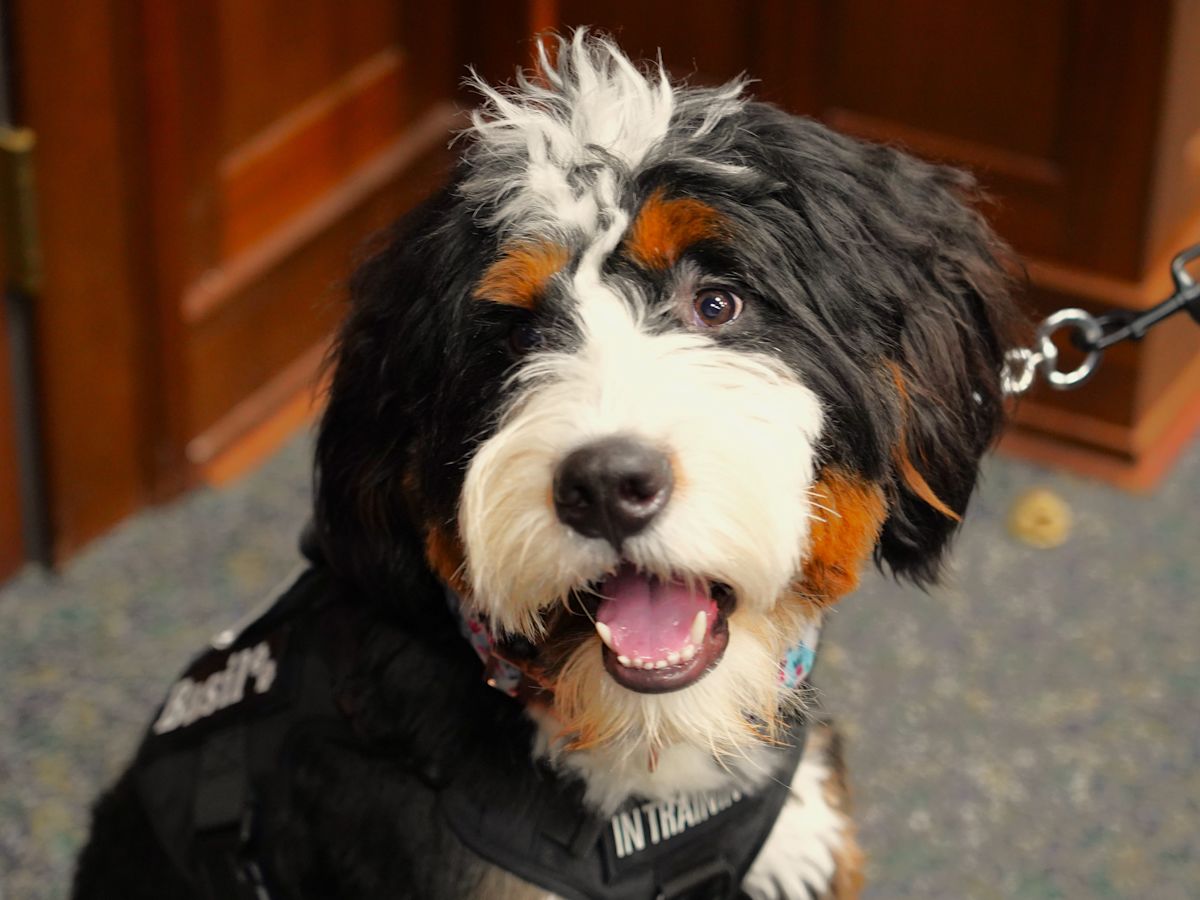
Receiving a jury summons in the mail is rarely met with enthusiasm by the average citizen, but those called for grand jury duty in Hamilton County encounter an unexpected presence in the justice system: a therapy dog named Basil. While grand jury service is often demanding and emotionally taxing, the presence of the prosecutor's office dog offers comfort to those participating in the county's criminal justice process.
Basil, who is readily recognizable by his mop of white fur, perpetual grin, and custom vest displaying his name, serves as a resident therapy animal for the Hamilton County Prosecutor's Office. He is frequently seen walking alongside detectives and attorneys through office hallways. His primary duty is to offer emotional support to crime victims, their families, and grand jurors who must absorb distressing and traumatic testimony during proceedings.
Grand juries operate far outside the familiar conventions of fictional courtroom dramas. Unlike petit juries that deliberate over final verdicts in traditional courtrooms, grand juries meet behind closed doors to assess the initial validity of criminal charges. Hamilton County selects these citizens from pools of voter-registration and driver's license records, requiring them to convene on a nearly daily basis to review pending criminal matters.
Beyond the presence of Basil, grand jury duty offers practical differences compared to standard trial service. Jurors report directly to the Hamilton County Prosecutor’s Office building located on Ninth Street, just a block away from the main courthouse. This arrangement allows grand jurors to bypass the lengthy courthouse security lines that standard trial jurors often face during their typical two-week assignments.
Grand juries represent a foundational step in the criminal justice systems of roughly half of all U.S. states, where they are utilized to evaluate whether the government possesses sufficient evidence to formally charge an individual. In Ohio, the grand jury process is reserved for serious felony matters rather than minor infractions. In Hamilton County specifically, grand juries examine every felony allegation, as well as any misdemeanor charges tied directly to those felonies.
The legal role of a grand jury is not to determine guilt or innocence, nor do these proceedings feature the theatrics of full trials. The accused individual and their defense attorney do not participate or present arguments in the room. Instead, grand jurors hear directly from law enforcement personnel and presenting witnesses, whom the jurors are empowered to question regarding the facts of each case.
According to guidance from the Ohio Judicial Council, the primary directive for grand jurors is to determine whether the presented evidence is sufficiently credible and reliable to conclude that the accused person probably committed the alleged offense. This standard of probability forms the foundation for the legal threshold known as probable cause, which must be established before a formal indictment can be returned.
The workload for grand jurors in Hamilton County is swift and demanding. Jurors serve on a rotation lasting two weeks, during which they may hear 100 or more individual cases. The schedule requires jurors to absorb a high volume of legal details and factual evidence in rapid succession as they weigh whether cases meet the statutory standards for indictment.
Hamilton County grand jury panels consist of nine voting members alongside alternates. In order for an indictment to be issued and allow a case to proceed toward prosecution, at least seven of the nine panel members must vote in favor. If fewer than seven jurors find sufficient cause, the case is dropped in an outcome known in court terminology as a "no bill" or an "ignored" case, though prosecutors retain the option to present the matter again if new evidence arises.
The operational scale of the grand jury system in Hamilton County is immense compared to smaller regions. Hamilton County Prosecutor Connie Pillich noted that while less populated Ohio counties convene grand juries infrequently, Hamilton County operates two separate panels of nine jurors plus alternates every single weekday, 52 weeks a year, pausing only for specific holidays.
The massive volume handled by the office resulted in more than 5,700 cases being presented to Hamilton County grand juries in 2025 alone. Decades of this relentless, day-in and day-out schedule have left physical marks on the facility, including deep grooves and noticeable wear etched into the wood-paneled walls where jurors' chairs have rubbed against them over years of daily service.
The physical grand jury rooms themselves are relatively small and cramped compared to spacious public courtrooms, but recent leadership has focused on improving the environment. Kate Burroughs, who became the Chief of Grand Juries and Intake in January 2025, took steps to refresh the workspace, with her daughters volunteering their time to clean the rooms and repair the worn-down chairs.
Burroughs also oversaw functional and technological upgrades within the grand jury rooms. Tables were introduced into the space to provide a better working setup, and modern television monitors were installed. Prior to these additions, presenting detectives often had to navigate the room holding up their personal mobile phones to display vital photographic and video evidence to panel members.
To prepare incoming citizens for this rigorous gatekeeping role, each two-week session begins with structured educational orientation. On their first day, jurors receive an instructional presentation detailing foundational legal concepts, such as the statutory meanings of acting "knowingly" or "recklessly," what constitutes legal possession, and current Ohio firearm laws, accompanied by a lighter docket to help them establish their footing.
As Prosecutor Pillich observed, the grand jury room is characterized by an absence of theatrical posturing, focusing instead on the methodical review of criminal allegations. While jurors encounter a wide variety of cases during their service, the largest single portion of their heavy docket consists of drug trafficking and drug possession offenses, which they review alongside support from office staff and Basil.








(0)