
The thirteenth day of September stands as a remarkably eventful date across the annals of modern history, defined by critical turning points in military conflict, landmark political breakthroughs, profound cultural shifts, and significant diplomatic achievements. Spanning more than two centuries, the occurrences recorded on this calendar day reflect both the resilience of nations in the face of grave adversity and the ongoing pursuit of governance, human rights, and institutional reform.
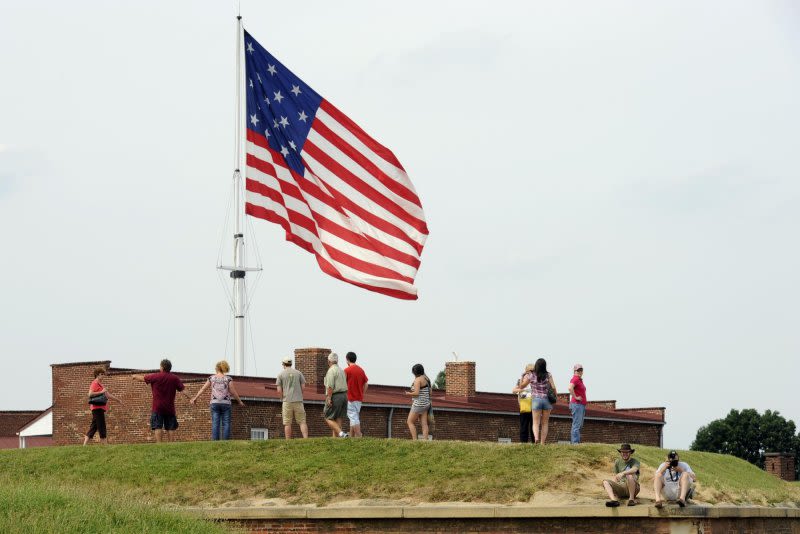
Back in 1814, during the height of the War of 1812, American lawyer and poet Francis Scott Key found himself observing a ferocious British military bombardment against Fort McHenry in Maryland. Key was deeply moved as he watched the American garrison stubbornly withstand the heavy British naval assault over the waters of Baltimore harbor, inspiring him to compose the stirring verses that would eventually become "The Star-Spangled Banner," the national anthem of the United States.
The dramatic military engagement at Fort McHenry, which unfolded across September 13 and 14, 1814, proved to be a decisive moment in repelling British advances during the conflict. Key’s evocative lyrics captured the raw tension of the nighttime bombardment and the triumphant sight of the American flag still waving at dawn, creating an enduring symbol of national identity that would resonate for generations to come.
More than a century later, on September 13, 1940, the destructive reality of World War II struck the heart of the British monarchy during the height of the German Blitz on London. German aerial bombs directly hit and destroyed the private royal chapel located within the grounds of Buckingham Palace, demonstrating that not even the highest seats of sovereign authority were insulated from the widespread devastation raining down upon the British capital.
Buckingham Palace sustained attacks on nine separate occasions throughout the course of the Second World War, yet the royal family famously resolved to remain in London as a sign of solidarity with the British public. Ten days following the chapel bombing, King George VI addressed the nation, speaking out with resolute moral clarity to condemn the widespread wickedness against which the Allied nations were engaged in mortal combat.
American political history achieved a groundbreaking milestone on September 13, 1948, when Republican politician Margaret Chase Smith of Maine won her landmark election to the United States Senate. Her historic victory came at a pivotal post-war juncture, challenging traditional gender norms within the upper echelons of national governance and signaling expanded possibilities for female political leadership.
Having previously served in the U.S. House of Representatives, Smith’s general election victory officially established her as the first woman in American history to serve in both chambers of Congress. Her trailblazing dual-chamber career established a vital precedent on Capitol Hill, opening new legislative horizons for women aspiring to high federal office in subsequent decades.
The date took a grim and violent turn in 1971 when state authorities in New York executed a high-stakes military-style assault on the Attica Correctional Facility. Following days of a tense uprising by incarcerated individuals seeking administrative changes and rights, armed state security forces stormed the facility to forcefully re-establish administrative control over the prison grounds.
The armed retaking of the facility quickly turned catastrophic, resulting in a final death toll of 43 people during the chaotic raid. The lethal conclusion at Attica shocked the American public, instantly becoming one of the deadliest and most controversial prison operations in national history, while catalyzing intense and enduring debates surrounding correctional standards and systemic justice reform.
Diplomatic history witnessed an extraordinary breakthrough on September 13, 1993, during a historic gathering on the South Lawn of the White House. Under the watchful eyes of global leaders and international media, Israeli Prime Minister Yitzhak Rabin and Palestine Liberation Organization Chairman Yasser Arafat came together to forge a new path toward reconciliation in the Middle East.
The two longtime adversaries officially signed a landmark declaration of principles that outlined a structural framework for Palestinian self-rule. The dramatic accord represented a major diplomatic triumph that sought to break decades of bitter regional hostility, establishing formal mechanisms intended to foster peaceful coexistence, transitional governance, and mutual recognition between Israelis and Palestinians.
In the realm of popular culture, September 13, 1996, marked the tragic end of one of hip-hop's most iconic and influential voices with the death of rapper Tupac Shakur. The celebrated artist passed away in a Los Angeles hospital after succumbing to severe wounds sustained during an ambush shooting on September 7, leaving behind a profound musical legacy and an unresolved tragedy that deeply shook the global music community.
Five years later, on September 13, 2001, the United States federal government authorized domestic commercial airlines to resume flight operations following the unprecedented nationwide grounding caused by the September 11 terrorist attacks. The resumption of civil aviation was accompanied by sweeping, heightened security protocols at airports across the country, fundamentally transforming the passenger travel experience and initiating a new era of strict transportation security oversight.
Global human rights advocacy reached a significant milestone on September 13, 2007, when the United Nations General Assembly officially adopted the Declaration on the Rights of Indigenous Peoples. Although the measure was non-binding and met with dissent from the United States, the historic document established an essential international benchmark that outlawed discrimination while affirming the collective rights of Indigenous communities regarding culture, identity, native language, healthcare access, education, and employment opportunities.
Nature demonstrated its immense destructive force on September 13, 2008, when Hurricane Ike made a devastating landfall along the Texas Gulf Coast. Packing sustained winds of 110 miles per hour and driving torrential rains, the monster storm battered Galveston and Houston, forced approximately one million people to evacuate their homes, and severed electrical power for millions more, ultimately claiming more than 100 lives across the United States and roughly 75 in Haiti.
From the stirring dawn of a national anthem amidst the smoke of battle to critical advancements in legislative representation, high-stakes international diplomacy, cultural losses, and major natural disasters, September 13 weaves together many of history’s most defining threads. The date endures as a vivid testament to humanity’s capacity for endurance, artistic expression, governance, and renewal across changing eras.









(0)